

Views: 0 Author: Site Editor Publish Time: 2026-11-02 Origin: Site


An automatic capsule filling machine becomes attractive when a supplement manufacturer needs more accepted capsules per shift, fewer manual transfers between filling steps, or a more repeatable process across operators. The case is strongest when a factory runs recurring batches and spends a significant part of each shift loading shells, transferring them between operations, or adjusting fill settings.
The decision depends on the product mix. A contract manufacturer running several capsule sizes and powder blends may value quick cleaning and changeovers more than maximum speed. A brand with one high-volume product may gain more from a sustained run at a stable fill weight. In either case, the best comparison uses the actual formula and counts accepted capsules over elapsed production time.
Table of Contents
An automatic hard capsule filler typically feeds and orients empty shells, separates the caps from the bodies, doses the fill material, closes the capsules, and discharges them. The exact sequence and available rejection functions depend on the machine configuration. Operators still replenish materials, monitor the run, sample output, and perform cleaning and changeovers.
Reducing manual transfers is particularly useful when the same product runs for several hours. For example, if operators routinely pause a semi-automatic machine to move capsule trays between stages, an automatic cycle can free some of that time. Observe the current process first and record where those pauses occur. That gives you a baseline for a realistic comparison.
An automatic filler repeats the same dosing cycle, giving the production team a consistent starting point for setting and checking the target fill weight. Actual consistency still depends on the blend, dosing setup, and how material reaches the dosing station. Powders that differ in bulk density, flow, or compressibility can behave differently in the same machine.
During a trial, take samples at startup, during stable operation, and after an agreed hopper refill or stop. Compare individual net fill weights with the limits in your product specification. A batch average can be on target even when individual capsules vary too widely.
Start with the actual powder, granules, or pellets you intend to use. Provide the target net fill weight, capsule size, shell type, and any known flow or handling issues. A bulky blend may need a larger capsule to reach the intended fill weight. A blend that tends to bridge or compact may need a different feeding or dosing setup.
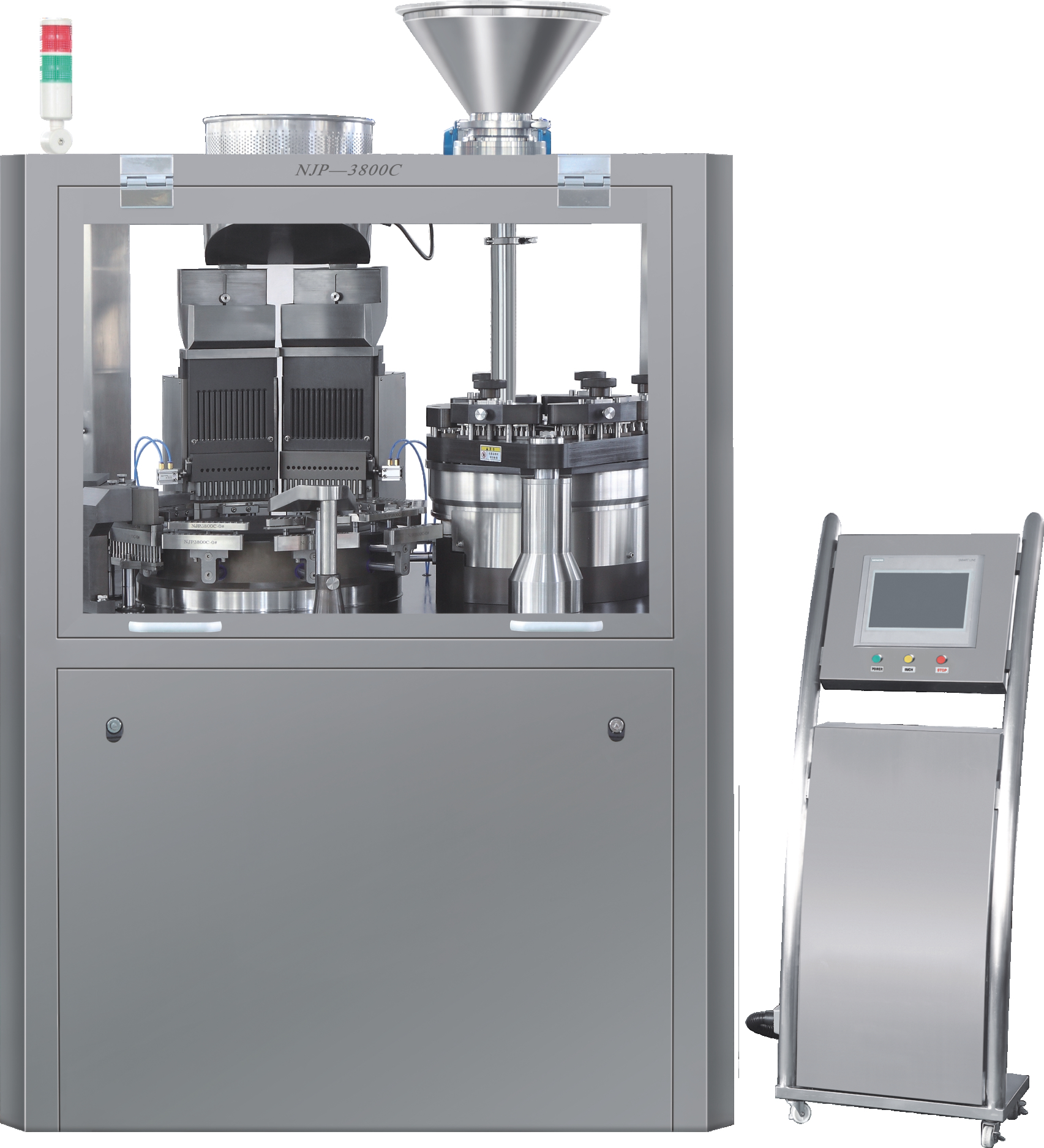
Tianhong’s automatic capsule filling machine range provides a starting point for comparing models. Its NJP-3800C automatic hard capsule filling machine is one model to review for larger production runs. Confirm which tooling and dosing configuration are included for your formula and capsule size.
For short batches, cleaning and changeover can occupy a large share of the schedule. For long runs, the time spent handling shells and moving work between steps becomes more important. Compare both routes against a representative shift, including the time between the last accepted capsule of one batch and the first approved capsule of the next.
Decision factor | Semi-automatic filling | Automatic filling |
|---|---|---|
Typical fit | Short batches, pilot runs, or schedules with frequent product changes | Recurring batches that can make use of a continuous filling cycle |
Operator involvement | More direct handling or transfers between stages, depending on the design | More steps are sequenced by the machine, with operator oversight still required |
Quality checks | Verify how loading, dosing, and closing are controlled across operators | Verify dose variation, shell handling, and closure at the proposed speed |
Changeover | Measure cleaning, setup, and tooling work for the actual equipment | Measure access, part removal, reassembly, and approval of the next product |
Capacity comparison | Count accepted capsules over elapsed time | Use the same time window, materials, and acceptance criteria |
Confirm how capsules move from the filler to any polishing, inspection, counting, or packaging equipment. A faster filler can create a queue if a downstream step handles fewer capsules per hour. Also check how the line responds when that step stops and whether the team can keep batches clearly identified during recovery.
Use the Tianhong equipment catalog to review the equipment families relevant to your project. Ask the supplier to state where its quote ends and which conveyors, utilities, inspection devices, or packaging interfaces you need to provide separately.
A catalog rate helps shortlist machines. A production trial shows how many capsules pass inspection under your operating conditions. Agree on which stops the test includes and where finished capsules are counted. Compare the same time window for each proposal.
Suppose a machine runs at 60,000 capsules per hour for 45 minutes of a measured hour. It produces 45,000 capsules during that period. If 98% pass inspection, the observed result is 44,100 accepted capsules per elapsed hour. This is an illustrative calculation. Use your own run time, rejection rate, and operating conditions when evaluating a quote.
Agree on what counts as an accepted capsule. Check whether the cap and body are properly joined and whether shells show splits, dents, or visible residue. If the proposed machine includes a rejection function, test which conditions it detects and how rejected capsules are separated from accepted output.
Use an agreed method to determine net fill weight. A gross weight measurement includes the shell, so shell weight variation can affect the result. Record individual measurements, sample times, machine speed, and the amount of powder in the hopper or other relevant feed conditions. The resulting record helps identify whether variation is concentrated at startup, after refilling, or throughout the run.
Ask the supplier to demonstrate a switch between two products that reflect your schedule. If you regularly change shell sizes, include the tooling change. If you frequently switch between blends in the same capsule size, focus on product-contact access, cleaning, reassembly, and the checks required before release.
Record total elapsed time, staffing, and the tools needed. Check which product-contact parts can be removed, which surfaces require inspection, and who signs off before the next run starts. A short mechanical adjustment can still lead to a long changeover if cleaning or first-piece approval takes most of the time.
Formula and fill: Identify the fill type, target net weight, and any available information on bulk density, flow, or sensitivity to handling.
Capsule shell: Provide the size, shell material, supplier or sample reference, and any sizes planned for future products.
Production schedule: State typical and peak batch quantities, shifts, changeover frequency, and target accepted capsules per hour.
Line interfaces: List the existing polisher, inspection, counting, or packaging equipment, plus available utilities and installation space.
Acceptance criteria: Specify fill weight limits, capsule appearance and closure checks, test duration, sample timing, and how stops and rejects will be counted.
Select a routine blend and, if possible, a formula that has caused inconsistent feeding, high rejects, or slow cleaning. Use production-representative shells and materials. Ask the supplier to document the machine model, tooling, speed, dosing settings, and any differences between the trial setup and the equipment in the quote.
Agree on which results must be demonstrated before shipment and which will be checked again after installation. If a formula is confidential, ask whether a representative material can be used for an initial trial and which findings must still be verified with your actual blend. Keep the sample records and approved settings so your team can reproduce the checks when the machine arrives.
Consider the switch when recurring demand, manual handling, or inconsistent output limits production. Compare accepted capsules per elapsed hour, staffing, and the full changeover time against your current process. Use representative batches before committing to the investment.
Some machines can run multiple sizes with the appropriate tooling and setup. Ask which sizes are supported on the quoted model, which change parts are included, and how long the size change takes in a representative trial.
The machine can repeat a dosing cycle, but results depend on the blend and setup. Net fill weight checks help verify how much material is in each sampled capsule. If ingredient distribution within the blend matters, use the appropriate product-specific tests in addition to fill weight checks.
Check the equipment design and dosing system. Liquid filling into hard capsules can require a dedicated configuration and a separate sealing step, depending on the product. Tianhong lists liquid capsule filling equipment separately from its automatic powder and pellet filling range.
Provide the capsule size and shell type, fill material, target net fill weight, batch volume, and required output. Include changeover frequency, downstream equipment, and the results you want the supplier to demonstrate during a trial.
Discuss your capsule filling requirements with Tianhong Machinery. Share your capsule sizes, fill material, target weight, batch schedule, and downstream equipment. If you are replacing an existing filler, include its current accepted output and the step that causes the most downtime.
