

Views: 0 Author: Site Editor Publish Time: 2026-07-28 Origin: Site


The physical state of an active pharmaceutical ingredient (API) or nutraceutical compound dictates its manufacturing trajectory. Choosing between powder and liquid formats is a fundamental engineering and biochemical constraint. Selecting the wrong encapsulation method leads to critical failures: poor API bioavailability, chronic production bottlenecks, formulation instability, and high material waste due to improper capsule sizing or leakage. Resolving this requires a technical evaluation of material characteristics, such as flowability versus viscosity, manufacturing infrastructure, and target pharmacokinetic profiles. This determines whether Powder Capsule Filling or liquid encapsulation aligns with your production capabilities and product efficacy goals.

Material Dynamics Dictate the Method: Powder capsule filling requires precise management of flow properties and formulation density to prevent clumping, whereas liquid filling demands strict viscosity control to prevent leakage and ensure uniform dosing.
Bioavailability vs. Stability Trade-offs: Liquid formulations generally offer superior absorption rates and bioavailability for poorly water-soluble compounds, while powders typically provide greater long-term chemical stability and longer shelf life.
Equipment and Scalability: Powder filling is the industry standard with highly accessible, scalable equipment. Liquid filling often requires specialized sealing technologies (banding) or softgel manufacturing infrastructure, increasing initial capital expenditure.
Sizing and Yield: Accurate calculation of formulation density is non-negotiable in both methods; incorrect capsule sizing directly correlates to production slowdowns, increased rejection rates, and avoidable material waste.
Table of Contents
Successful encapsulation begins with defining the baseline physical and chemical properties of the raw materials. Formulators must evaluate moisture sensitivity, melting point, particle size, and solubility. A highly hygroscopic powder behaves very differently inside a gelatin shell compared to a stable, granular compound. Understanding these baseline metrics prevents catastrophic interactions between the fill material and the capsule polymer. You must test the equilibrium moisture content of your API before selecting a shell material.
Target pharmacokinetics play a defining role in format selection. You must determine the required release profile, whether immediate, delayed, or sustained. The physical state of the fill material heavily influences absorption rates in the gastrointestinal tract. Liquids bypass the initial dissolution phase required by solids, offering a faster route to systemic circulation. If your API falls under BCS Class II or IV, a lipid-based liquid formulation often provides the necessary bioavailability boost.
Distinguish between shell disintegration and formulation dissolution. The time required for a capsule shell to rupture is only the first step. The active core must then enter solution. If the powder forms a dense plug that fails to disperse, the rapid disintegration of the shell offers no pharmacokinetic advantage. Formulators often add superdisintegrants to powder blends to ensure the slug breaks apart rapidly once the shell dissolves.
Manufacturing viability requires an honest assessment of current facility capabilities. Environmental controls, specifically humidity and temperature, dictate what materials can be processed safely. You must evaluate available machinery and operator expertise. Assess the acceptable margins for material loss during production and how equipment changeover times impact overall operational efficiency. Running a high-viscosity liquid requires heated hoppers and specialized pumps, which your facility may not currently possess.
Property | Gelatin Capsules | HPMC Capsules |
|---|---|---|
Moisture Content | 13% - 16% | 4% - 6% |
Best For | Standard powders, non-hygroscopic materials | Hygroscopic powders, moisture-sensitive APIs |
Cross-linking Risk | High (with aldehydes) | Low to None |
Disintegration Time | Fast (typically < 15 mins) | Slightly slower, dependent on media |
The primary mechanisms for Powder Capsule Filling rely on either tamping pin or dosator systems. Tamping pin machines compress the powder into a slug across multiple stations before transferring it into the capsule body. This method requires specific cohesive properties to form a stable plug. Dosator systems use a hollow tube that plunges into the powder bed, compressing the material inside the tube before ejecting it into the capsule. Both systems demand consistent powder flow to maintain weight uniformity.
Excipients are engineered to optimize these powder flow properties. Glidants reduce inter-particulate friction, allowing the powder to flow freely from the hopper into the dosing disk. Lubricants prevent the powder from adhering to machine tooling, reducing friction during plug ejection. Diluents provide the necessary bulk for low-dose APIs, ensuring the capsule is adequately filled. A well-designed excipient matrix ensures consistent fill weights across a long production run.
Formulation density calculation remains a critical step. Matching the tapped density of the blend to the correct capsule size maximizes yield and prevents machine jamming. If the density is miscalculated, operators will either overfill the capsule, causing the shell to split, or underfill it, resulting in sub-potent dosages. You must measure the bulk and tapped density of the final blend using a tapped density tester before finalizing the capsule size.
Powder encapsulation benefits from massive industry standardization. There is high availability of scalable machinery, ranging from benchtop manual fillers for R&D to high-speed automated rotary machines capable of producing hundreds of thousands of units per hour. This standardization simplifies operator training, maintenance, and spare parts procurement.
Chemical stability is a major advantage. Powders present a lower risk of API degradation compared to liquids. This is particularly true for moisture-sensitive or highly reactive compounds. Without a liquid vehicle to facilitate chemical reactions, solid-state APIs generally maintain their potency over a longer shelf life. Solid dosage forms also eliminate the risk of API precipitation, which can occur in liquid formulations over time.
Cost efficiency drives many formulation decisions. Powder processing generally requires lower capital expenditure for equipment. Operational costs per unit produced are also lower, as the process avoids the secondary sealing steps required for liquid-filled hard capsules. Packaging and shipping costs are often reduced due to the lower overall weight and reduced risk of leakage during transit.
Flowability bottlenecks present the most common challenge. Poorly flowing powders, such as cohesive or hygroscopic materials, lead to inconsistent dosing, clumping, and weight variations. When powder bridges in the hopper, the machine will produce empty or partially filled capsules. Operators must constantly monitor the powder bed and adjust machine speeds to compensate for poor flow dynamics.
Electrostatic charge issues frequently disrupt production. Fine powder particles accumulate static charges during blending and transport. This causes adhesion to dosing components and incomplete capsule filling. Proper grounding of all equipment and strict environmental humidity controls are required to mitigate this risk. Sometimes, adding a small percentage of an anti-static agent to the blend is necessary.
Bioavailability hurdles exist because powders must undergo deaggregation and dissolution in the stomach before absorption. This inherently delays the onset time compared to pre-dissolved liquids. Additionally, powder processing carries higher cross-contamination risks due to airborne particulates, requiring stringent dust extraction and HVAC controls in the manufacturing suite.
Liquid encapsulation formats are divided into liquid-filled hard capsules (LFHC) and soft gelatin capsules (softgels). LFHC utilizes standard two-piece capsule shells filled with a liquid or semi-solid matrix. Softgels are formed, filled, and sealed in a single continuous operation using a rotary die process. LFHC allows for in-house filling using modified hard capsule machines, while softgels typically require dedicated, large-scale manufacturing lines.
Viscosity parameters dictate the success of the fill. Liquids must be formulated within specific viscosity ranges, typically between 100 and 1000 centipoise (cps) at filling temperature. Very low viscosity liquids must be avoided to mitigate leakage through the gap between the capsule cap and body before sealing. Conversely, overly thick formulations impede pumpability, cause stringing at the nozzle, and destroy dosing accuracy.
Secondary sealing technologies are mandatory for hard capsules containing liquids. Gelatin banding applies a thin strip of gelatin around the seam, while liquid sealing uses a solvent to fuse the cap and body together. These processes prevent oxidation, evaporation, and leakage during transport and storage. The banding process requires a separate machine and a drying tunnel to cure the band before packaging.
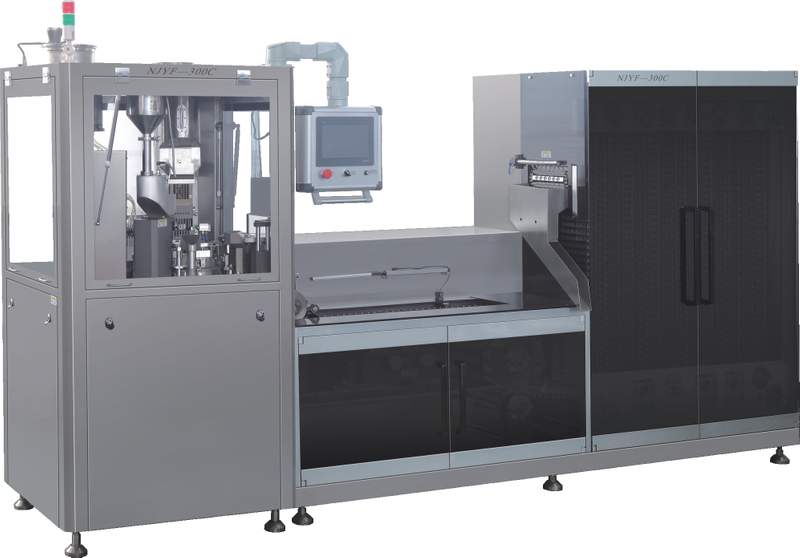
Enhanced bioavailability is the primary driver for liquid formulations. Liquids are already in a dissolved or solubilized state, bypassing the solid dissolution phase. This offers faster absorption, which is highly beneficial for lipid-soluble compounds. Formulating an API in a self-microemulsifying drug delivery system (SMEDDS) can drastically improve its absorption profile compared to a standard powder blend.
Content uniformity is superior in liquid systems. Liquid pumps provide highly accurate dosing for low-dose, highly potent compounds. In powder formats, blending such compounds might result in segregation or hotspotting, whereas a properly mixed liquid solution guarantees equal API distribution in every drop. This is critical for drugs with a narrow therapeutic index.
Tamper resistance and aesthetics offer distinct marketing and safety benefits. Banded liquid capsules provide clear visual evidence of tampering. The band also minimizes oxygen ingress, protecting sensitive compounds, and offers unique branding opportunities through contrasting colors. A clear capsule filled with a brightly colored liquid stands out visually on the shelf.
Leakage and integrity risks are severe if formulations are poorly designed. Incompatible excipients, particularly those with high water activity, can degrade the capsule shell. Whether using gelatin or HPMC, high water content will soften the shell, leading to catastrophic batch failures and sticky, ruined lots. You must test the water activity (Aw) of your liquid fill; it should generally be below 0.2 to ensure shell stability.
The manufacturing infrastructure is highly complex. Liquid filling requires specialized pumps, sealing equipment, and rigorous temperature and humidity controls during filling. The equipment footprint is larger, and the technical expertise required to maintain the machinery is higher than standard powder filling. Operators must be trained on pump calibration, nozzle alignment, and band thickness adjustments.
Shorter shelf life can be a drawback. Liquid formulations have an increased susceptibility to oxidation. There is also a higher risk of chemical interactions between the liquid fill and the capsule shell over time, requiring extensive stability testing before commercialization. You may need to flush the mixing tanks and the capsule headspace with nitrogen to displace oxygen and extend the product's shelf life.
Formulators must evaluate when to prioritize the rapid onset of liquids versus the long-term robustness of solid powders. A decision matrix based on API solubility often dictates the path. Compounds that suffer from poor aqueous solubility often favor lipid-based liquid formulations to enhance absorption. Conversely, highly stable, water-soluble APIs are perfectly suited for standard powder filling.
Comparing the pharmacokinetic path reveals distinct differences. A liquid LFHC releases a pre-dissolved payload immediately upon shell rupture. A powder hard capsule requires the shell to dissolve, the powder plug to break apart, and the API to dissolve into the gastric fluids before absorption can begin. If rapid pain relief is the goal, liquid is superior. If sustained release over 12 hours is required, coated powder pellets are the better choice.
Parameter | Powder Capsule Filling | Liquid Capsule Filling |
|---|---|---|
Fill Material State | Solid (Powder, Granules, Pellets) | Liquid, Suspension, Semi-solid |
Dosing Mechanism | Tamping Pin or Dosator | Volumetric Piston Pump |
Secondary Sealing | Not Required | Mandatory (Banding or Solvent Seal) |
Primary Challenge | Flowability and Weight Variation | Viscosity Control and Leakage |
Ideal API Profile | Stable, water-soluble, high dose | Poorly soluble, highly potent, low dose |
Powder filling allows for modular scaling. A facility can start with semi-automatic machines and seamlessly upgrade to fully automatic rotary systems using the same fundamental formulation. The transition from R&D to commercial production is straightforward. Liquid filling requires specialized containment, banding machines, and drying tunnels from the outset, making small-scale pilot runs more complex to execute.
Changeover times differ significantly. Powder dust removal requires extensive vacuuming, dismantling of dosing disks, and swabbing to validate cleaning. You must ensure no cross-contamination occurs between batches. Liquid line flushing involves running solvents or hot water through the pumps and nozzles. While flushing can be faster, it requires careful validation to ensure no residual cleaning agents remain in the system.
Regulatory considerations for weight variation fall under strict pharmacopeial guidelines. Powders require strict blend uniformity testing before filling and continuous weight monitoring during the run. Operators pull samples every 15 minutes to verify the machine is holding the target weight. Liquids require rigorous leak testing, such as vacuum decay methods, and extensive shell compatibility stability data to prove the liquid will not compromise the capsule over its shelf life.

Inconsistent fill weights in powders occur when poor flow leads to erratic dosing. Conduct thorough pre-formulation rheology testing, calculating Carr’s Index and the Hausner Ratio. A Carr's Index above 25 indicates poor flow. If flow is poor, utilize dry granulation or roller compaction to improve flow properties before attempting encapsulation. Adjusting the glidant concentration in the blend can also resolve minor flow issues.
Capsule leakage in liquids happens when thin liquids escape the shell before sealing. Implement strict viscosity controls using thixotropic agents like silicon dioxide. Mandate 100% automated inspection, utilizing vacuum decay testing or blue dye leak testing, to verify band integrity on every unit. Ensure the filling temperature is strictly controlled, as temperature fluctuations drastically alter liquid viscosity.
Incorrect capsule sizing leads to machine jams and waste. Standardize bulk and tapped formulation density testing protocols prior to machine setup. Utilize sizing charts and density-to-volume calculations rigorously to prevent production slowdowns, machine wear, and material waste. Never guess the capsule size; always rely on empirical density data.
Shell embrittlement or softening destroys the capsule. Match the capsule polymer to the fill material. Avoid hygroscopic powders in standard gelatin, as they pull moisture from the shell, causing it to shatter. Avoid high-water-content liquids in any standard hard capsule, utilizing HPMC for low-moisture formulations. Conduct compatibility studies at accelerated temperature and humidity conditions to identify potential shell failures early.
Choosing between powder capsule filling and liquid capsule filling requires balancing formulation performance, manufacturing efficiency, product stability, and long-term production costs. By evaluating your formulation characteristics, equipment capabilities, and quality requirements, you can select an encapsulation process that maximizes product performance while supporting efficient and scalable pharmaceutical manufacturing.
To improve your encapsulation process, consider the following recommendations:
Conduct pilot-scale production trials to evaluate powder flowability or liquid viscosity before commercial manufacturing.
Calculate formulation density or viscosity accurately to determine the correct capsule size and filling parameters.
Select capsule shell materials based on moisture compatibility and long-term formulation stability.
Validate machine performance, filling accuracy, and production yield before expanding to full-scale manufacturing.
With extensive experience in pharmaceutical machinery manufacturing, TIANHONG has established itself as a trusted global supplier of capsule filling equipment and integrated pharmaceutical production solutions. Combining advanced engineering, intelligent automation, precision manufacturing, and strict GMP quality standards, the company delivers reliable equipment that supports efficient, stable, and high-quality pharmaceutical and nutraceutical production worldwide.
From powder capsule filling machines and liquid capsule filling systems to fully automatic capsule production lines, TIANHONG provides customized equipment solutions, formulation consultation, installation and commissioning, validation support, operator training, and comprehensive after-sales service. Through continuous innovation and customer-focused engineering, the company helps manufacturers improve production efficiency, reduce operating costs, enhance product consistency, and achieve sustainable long-term business growth.
A: Powder capsules are generally faster to manufacture at scale. High-speed rotary powder filling machines can output hundreds of thousands of capsules per hour. Liquid filling requires secondary processes like banding or sealing, and softgel manufacturing involves slower drying times, reducing overall throughput speed.
A: Flowability directly dictates dosing consistency. If a powder flows poorly, it bridges in the hopper or fills the dosing cavities unevenly. This results in unacceptable weight variations, sub-potent capsules, and high rejection rates during quality control inspections.
A: Yes, but it requires specific parameters. The liquid must not contain high water activity, or it will melt the gelatin. Additionally, the filled capsule must undergo a secondary sealing process, such as gelatin banding, to prevent the liquid from leaking out of the seam.
A: Liquid formulations hold the active ingredients in a pre-dissolved or solubilized state. When the capsule shell ruptures in the stomach, the liquid is immediately available for absorption. Powders must first deaggregate and dissolve into gastric fluids before the body can absorb them.
A: You must calculate the tapped density of your final powder blend. Once you know the tapped density (g/mL) and your target dose weight, you divide the target weight by the density to find the required volume. Match this volume to a standard capsule sizing chart.
A: Leakage is primarily caused by formulations with excessively low viscosity, incompatible excipients that degrade the capsule shell, or failures in the secondary banding/sealing process. High temperatures during storage can also cause liquid expansion, breaking the seal.
