

Views: 0 Author: Site Editor Publish Time: 2026-07-28 Origin: Site


Scaling capsule production often creates a severe operational bottleneck in supplement and pharmaceutical manufacturing. Facility managers constantly struggle to increase output without compromising dose accuracy or relying on unsustainable manual labor. You need a reliable way to encapsulate powders, pellets, or liquids efficiently. The tension between highly time-consuming manual processes and the significant capital expenditure required for automated encapsulation forces production teams to make difficult decisions. Choosing the wrong equipment leads to frequent downtime, wasted raw materials, and missed production targets.
To solve this, you must adopt a structured evaluation framework. Balancing throughput requirements, formulation characteristics, and regulatory compliance is essential to select the optimal Capsule Filling Machine. This guide breaks down the critical technical specifications, machine categories, and facility requirements you need to understand. You will learn how to match machine capabilities to your specific powder flowability, calculate realistic production speeds, and ensure strict compliance with industry standards.
Throughput Dictates Automation Level: Matching your actual capsules-per-hour (CPH) requirements to machine capacity prevents both operational bottlenecks and unnecessary CapEx.
Formulation Dynamics Matter: Powder flowability, stickiness, and fill type (powder, pellet, or liquid) directly dictate the required dosing mechanism (tamping pin vs. dosator).
Hidden Costs in Changeovers: The true cost of a machine includes tooling changeover times, cleaning protocols, and operator training, not just the initial purchase price.
Compliance is Non-Negotiable: For commercial viability, equipment must meet cGMP standards and come with comprehensive IQ/OQ/PQ validation documentation.
Table of Contents
Determining your required Capsules Per Hour (CPH) is the first step in equipment selection. You must calculate this based on your daily and weekly batch targets. If your facility needs to produce one million capsules per week over five single-shift days, your baseline requirement is 200,000 capsules per day. However, simply dividing this by eight hours provides an inaccurate target. You have to factor in Overall Equipment Effectiveness (OEE).
You must understand the difference between a machine's theoretical maximum speed and its realistic operational throughput. Manufacturers often rate machines under ideal conditions using free-flowing placebo powders. Real-world production involves unavoidable downtime. You must account for powder loading, capsule replenishment, routine cleaning, and batch changeovers. A machine rated for 100,000 CPH may only yield 75,000 CPH in actual daily operation once you factor in operator breaks and material staging. Small-batch scaling needs, typically around 5,000 to 10,000 capsules daily, require vastly different equipment than continuous high-volume industrial operations running multiple shifts.
When calculating throughput, always build in a 20% buffer for future growth. If you buy a machine that exactly meets your current maximum capacity, you will bottleneck your production line the moment sales increase. Look at your historical sales data and project your volume requirements 18 to 24 months out.
Your formulation directly dictates the mechanical requirements of your equipment. Powder flowability is a primary concern. The angle of repose, Carr's Index, and Hausner ratio of your blend determine how easily it fills a capsule body. Free-flowing powders move smoothly through hoppers and dosing stations without bridging or rat-holing. Cohesive or sticky powders require mechanical agitation, specialized feeding mechanisms, or specific dosing technologies to prevent blockages and ensure uniform fill weights.
Alternative fill formats introduce additional technical requirements. Liquid fills require specialized pumps, heated hoppers for viscous materials, and secure capsule sealing mechanisms to prevent leakage during packaging. Pellets and granules demand gentle handling to avoid crushing the active ingredients or altering their enteric coating release profiles. Combination fills, such as powder and pellets in the same capsule, require advanced machinery with multiple independent dosing stations synchronized perfectly.
You also need to consider the bulk density of your formulation. Light, fluffy powders require more tamping pressure to fit the required dose into a specific capsule size. Dense, heavy powders might require less tamping but can cause excessive wear on dosing discs and pins if they are highly abrasive.

Matching the machine to standard capsule sizes is mandatory. Standard sizes range from the very large Size 000 down to the tiny Size 5. Your equipment must have the correct tooling for your chosen sizes. If you run multiple sizes, modular tooling is necessary. Changing from a Size 0 to a Size 1 requires swapping out the dosing disc, alignment blocks, and tamping pins.
Capsule material also behaves differently under mechanical stress. Traditional gelatin capsules are robust but sensitive to heat and moisture. They require strict environmental controls to prevent them from becoming brittle or sticky. HPMC (vegetarian) and pullulan capsules have different moisture contents and brittleness profiles. These alternative materials can shatter or deform under aggressive vacuum separation or improper tamping pressure. You must ensure the separation and closing stations of your chosen machine are calibrated for the specific elasticity and moisture profile of your capsule shells.
Static electricity is another major factor, particularly with HPMC capsules. Static buildup can cause empty capsules to stick together in the hopper or fail to separate properly in the rectifier block. Machines processing vegetarian capsules often require integrated static eliminators or ionized air jets to maintain smooth operation.
Manual systems serve specific, low-volume environments. They are the standard choice for home use, research and development labs, compounding pharmacies, and micro-batch startups. These units rely entirely on operator intervention for every step of the process, from loading the empty shells to tamping the powder and locking the caps.
Capacity is physically limited by hole-plate configurations. Common layouts include 24-hole, 100-hole, or 400-hole designs. The layout dictates operator speed, as users must manually separate, fill, tamp, and close the capsules. While the initial investment is minimal, the labor intensity compounds rapidly as production demands grow. Operator fatigue sets in quickly, leading to inconsistent tamping pressure and variable fill weights across a single batch.
Manual systems also carry a higher risk of cross-contamination. Because the powder is exposed to the open air and manipulated by hand tools, maintaining a sterile environment is difficult. These systems struggle to achieve precise dose uniformity across large batches, making them unsuitable for strict pharmaceutical applications where tight weight tolerances are required.
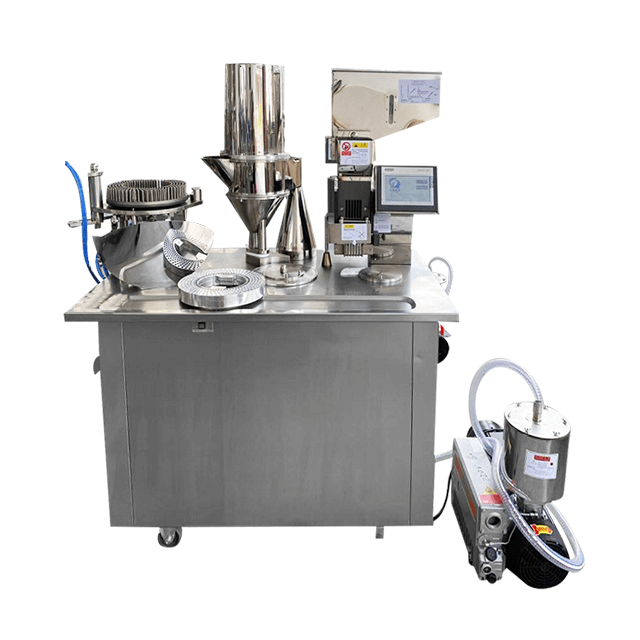
Semi-automatic units bridge the gap for mid-market scaling. They are ideal for small-batch contract manufacturing and medium-batch production, typically handling 10,000 to 30,000 CPH. These machines introduce mechanical assistance while still requiring operator control to move materials between stations.
The operational reality involves a hybrid process. An operator manually transfers a capsule ring between the separation, filling, and closing stations. The machine automates the rotation and powder delivery via an auger system, significantly improving speed and fill accuracy over manual plates. The operator controls the fill weight by adjusting the auger speed and the rotation speed of the capsule ring.
The primary trade-off is labor. While requiring less initial capital than fully automated systems, a semi-automatic Capsule Filling Machine demands a dedicated, highly active operator. The operator's skill directly impacts the machine's output and consistency. If the operator transfers the rings too slowly or fails to maintain a consistent powder level in the hopper, production rates drop and weight variations increase.
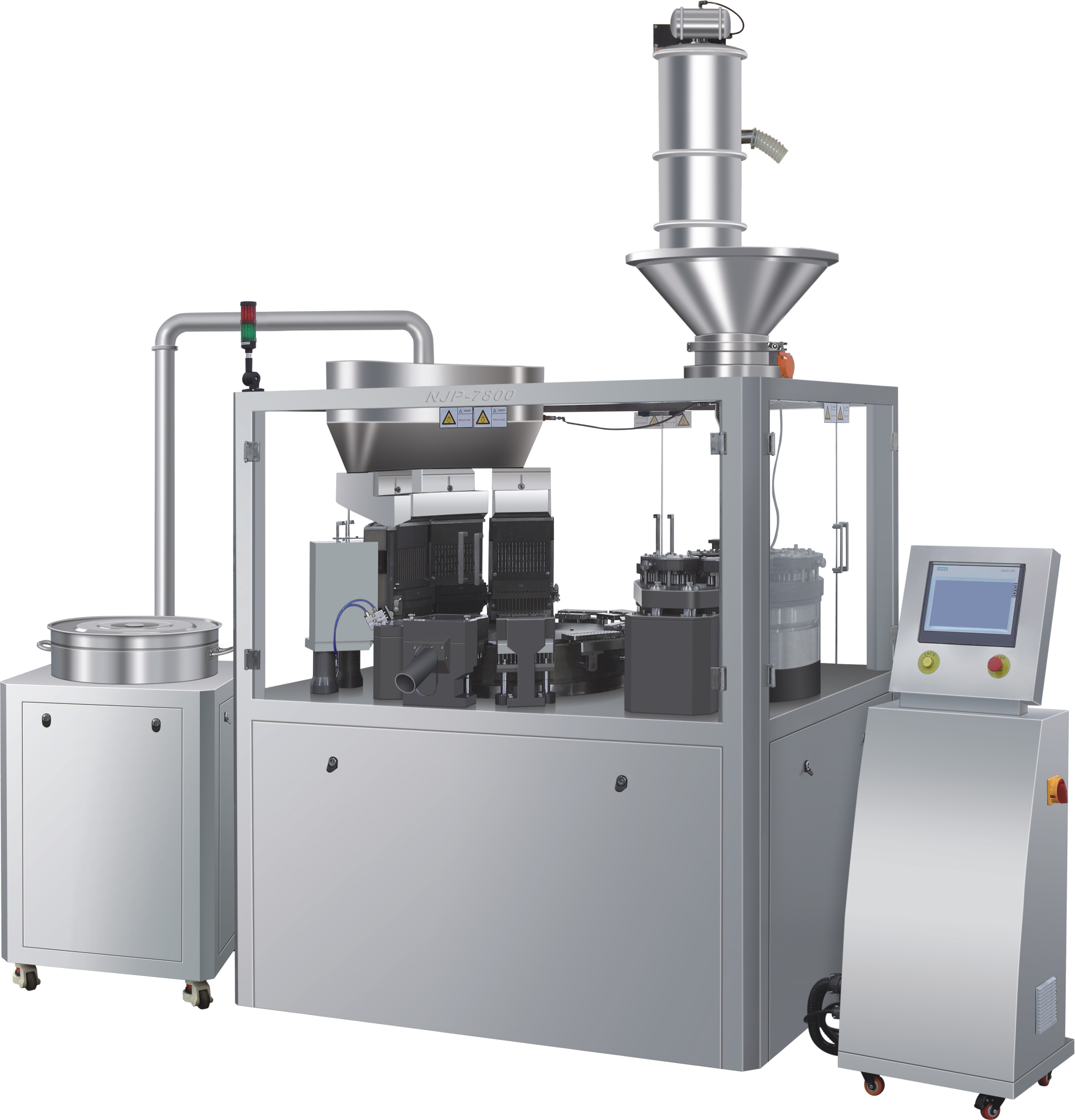
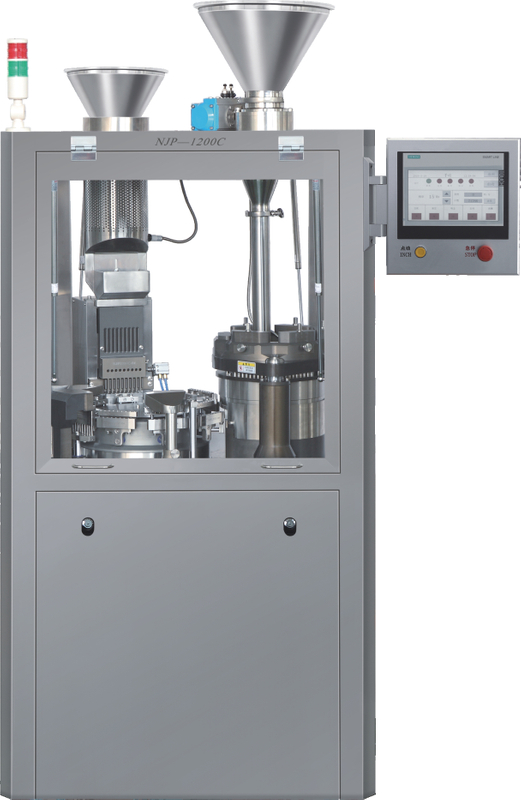
High-volume commercial manufacturing requires fully automatic systems. These machines handle industrial-scale production, ranging from 40,000 to over 400,000 CPH. They are designed for continuous, reliable output with minimal human intervention, operating on either intermittent or continuous motion principles.
These units operate in enclosed environments. They automate the entire process: feeding, separation, filling, rejecting defective capsules, and locking the final product. The continuous operation maximizes throughput and ensures exceptional dose precision. Advanced sensors monitor every step, automatically ejecting unseparated capsules or those that fail to lock properly.
The trade-offs include a higher initial investment and complex maintenance requirements. You need trained technicians to handle changeovers, calibrate sensors, and perform preventative maintenance. However, these factors are offset by minimal labor requirements per unit produced and strictly controlled dose uniformity. A single operator can often monitor multiple fully automatic machines simultaneously, drastically reducing your per-capsule labor burden.
The dosing mechanism is the heart of the machine. Tamping pin systems are highly effective for standard, cohesive powders. They use a series of pins to compress the powder into a solid slug within a dosing disc before transferring it into the capsule body. This process usually happens across five or six tamping stations, gradually building the slug's density. This method provides excellent weight control for most standard formulations and allows for easy adjustment of fill weights by changing the pin depth.
Dosator systems operate differently. They use a hollow tube that plunges into the powder bed, capturing a specific volume of material. A piston inside the tube slightly compresses the powder to form a plug, and then the tube moves over the empty capsule body to eject the dose. Dosators excel at micro-dosing, handling delicate pellets, managing powder-pellet combinations, and processing materials with poor flowability. They rely on vacuum retention to hold the powder in the tube during transfer, making them highly precise for low-weight fills.
Choosing between the two depends entirely on your product portfolio. If you run standard herbal powders and vitamins, a tamping pin system is robust and easy to maintain. If you manufacture specialized pharmaceuticals requiring 15mg micro-doses or complex multi-particulate fills, a dosator system is mandatory.
Getting empty capsules into the correct position requires precision. Machines use either mechanical directional alignment or vacuum-assisted feeding and separation. Mechanical systems use physical guides and rectifier blocks to flip and align capsules so the caps face upward. Vacuum systems use suction from a manifold to pull the capsule body down into the lower tooling while the cap remains seated in the upper tooling.
The separation technique directly impacts shell damage and reject rates. An aggressive vacuum can dent or crack brittle vegetarian capsules. Improper mechanical alignment leads to unseparated capsules, which cannot be filled and must be rejected. A high-quality orientation system maximizes overall machine yield by ensuring nearly 100% of capsules are properly seated and separated before they reach the dosing station.
Raceway jams are a common issue in lower-quality machines. If the capsule feeding magazines are not machined to tight tolerances, capsules can overlap and jam, forcing the operator to stop the machine and clear the blockage. Look for machines with polished, precision-machined raceways and reliable optical sensors that detect jams instantly.
Dosing accuracy is critical for regulatory compliance and product efficacy. Acceptable fill weight variance margins typically range from ±1% to ±3%, depending on the active ingredients and local pharmacopeia standards. Machine quality heavily impacts batch rejection rates. Inconsistent tamping, worn dosing discs, or poor powder flow leads to capsules outside the acceptable weight parameters.
Poor yield rates have a severe financial impact. Wasted raw materials, especially expensive active pharmaceutical ingredients or rare herbal extracts, drain profitability. A high-precision machine minimizes waste, ensuring that the maximum amount of your raw material makes it into the finished, saleable product. You must monitor the machine's yield rate closely during the validation phase.
To maintain accuracy, operators must perform regular weight checks. Many modern machines integrate with external checkweighers that provide a closed-loop feedback system. If the checkweigher detects a trend toward lighter or heavier capsules, it automatically signals the filling machine to adjust the tamping pin depth or dosator piston stroke, correcting the variance without stopping production.

Switching capsule sizes requires changing the machine's tooling. This process includes swapping dosing discs, alignment blocks, tamping pins, and capsule magazines. Older or low-end machines often require complex, multi-hour changeovers involving specialized tools, dial indicators, and extensive recalibration by a senior mechanic.
Modern modular systems drastically reduce this downtime by applying Single Minute Exchange of Die (SMED) principles. Many contemporary machines feature tool-less disassembly, utilizing quick-release clamps and alignment pins. This allows operators to complete a full size changeover in under 45 minutes. Accessible, highly polished stainless steel surfaces are essential for rapid cleaning. Efficient cleanability prevents batch-to-batch cross-contamination and keeps the machine in active production rather than sitting idle during sanitation protocols.
Troubleshooting Common Capsule Filling Issues | ||
Issue | Potential Cause | Corrective Action |
|---|---|---|
Inconsistent Fill Weights | Poor powder flow or worn tamping pins | Add glidant to formulation; replace worn pins |
Capsules Not Separating | Low vacuum pressure or brittle shells | Check vacuum pump filters; verify capsule moisture |
Dented Capsule Caps | Closing station pressure too high | Adjust closing pin height and locking pressure |
Powder Leaking from Joints | Overfilled bodies or static electricity | Reduce fill weight; install static eliminator |
Regulatory compliance dictates the construction materials of your equipment. Current Good Manufacturing Practices (cGMP) require that all product contact parts be manufactured from 316L stainless steel. This grade provides superior corrosion resistance and prevents material degradation when exposed to harsh cleaning chemicals. The surface roughness (Ra value) of these parts must be extremely low to prevent powder from adhering to the metal.
Additionally, all seals, gaskets, and lubricants used in the machine must be FDA-approved and food-grade to eliminate the risk of product contamination. Non-contact parts are typically made from 304 stainless steel or anodized aluminum. The machine's software and control systems must also comply with FDA 21 CFR Part 11 regulations regarding electronic records and digital signatures, ensuring that all batch data and parameter changes are securely logged and auditable.
Verifying machine performance before deployment is critical. A Factory Acceptance Test (FAT) occurs at the manufacturer's facility. It allows you to prove the machine runs your specific formulation successfully before shipping. During the FAT, you verify the machine's speed, weight accuracy, and safety interlocks. Site Acceptance Testing (SAT) verifies that the machine functions correctly after installation in your facility, ensuring no damage occurred during transport.
Validation documentation is mandatory for pharmaceutical and nutraceutical producers. You must secure Installation Qualification (IQ), Operational Qualification (OQ), and Performance Qualification (PQ) documents from the vendor. Operating without IQ/OQ/PQ documentation creates severe regulatory risks, potentially leading to failed audits, product recalls, and halted production lines. These documents prove that the machine is installed correctly, operates as designed, and consistently produces capsules that meet your predetermined quality specifications.
Advanced machines incorporate inline quality control to maintain batch integrity. Automated weight checking systems can perform statistical sampling or 100% gravimetric analysis, instantly rejecting capsules that fall outside weight tolerances. Some systems use Near-Infrared (NIR) spectroscopy to verify the presence and concentration of active ingredients in real-time.
Vacuum rejection systems automatically identify and eject unseparated capsules before they reach the filling station, preventing powder spills and machine jams. Integrated dust extraction systems keep the mechanical components clean, reducing wear and preventing powder buildup from impacting dosing accuracy. These extraction systems pull airborne particulate away from the dosing disc and capsule closing stations, maintaining a clean operating environment and protecting the operator from inhalation exposure.

Evaluating the financial impact requires looking at labor hours. A semi-automatic or automatic machine requires a significant upfront capital expenditure. However, you must compare this against the ongoing hourly wages required to run manual fillers at an equivalent scale. If you need to produce 50,000 capsules a day, doing so manually requires multiple operators working full shifts. An automatic machine handles this volume in under two hours with a single operator.
The labor savings compound quickly. By automating the process, you reallocate your workforce to higher-value tasks like quality control, packaging, or facility maintenance. You also eliminate the costs associated with human error, such as inconsistent fill weights that lead to rejected batches. When calculating your return on investment, factor in the reduction in wasted raw materials and the ability to take on larger contracts due to increased production capacity.
Reliable operation depends on robust vendor support. Sourcing unbranded, imported machines carries significant implementation risks. These units often lack domestic spare parts inventory, comprehensive technical manuals, or local engineering support. When a proprietary component fails, production halts until a replacement ships internationally, which can take weeks.
You must establish structured, accessible preventative maintenance schedules. Partner with vendors who provide detailed maintenance protocols and rapid access to wear parts like dosing pins, vacuum seals, and alignment blocks. Consistent maintenance prevents catastrophic breakdowns and extends the operational lifespan of the equipment. Ensure your maintenance team understands the lubrication schedules for the main drive cams and the cleaning procedures for the vacuum manifolds.
Before installation, you must verify your facility constraints. Industrial machines require specific utilities. Verify your compressed air capacity, as pneumatic systems drive many separation and rejection mechanisms. You typically need clean, dry air delivered at a specific CFM and PSI. Ensure you have the correct three-phase electrical power available at the installation site, complete with dedicated drops and appropriate breakers.
Environmental controls are equally important. Strict HVAC and humidity controls are essential. You must maintain relative humidity (RH) between 45% and 55% and temperatures around 68°F to 72°F. This prevents gelatin capsules from becoming brittle or sticky and stops hygroscopic powders from clumping in the hopper. Finally, verify your floor space and load-bearing limits. Fully automatic systems are heavy, often exceeding 2,000 pounds, and require adequate clearance for operators, material loading, and routine maintenance access.
Selecting a capsule filling machine should be based on a comprehensive evaluation of production capacity, formulation characteristics, regulatory requirements, and long-term operating efficiency rather than equipment price alone. A well-planned investment will help manufacturers improve product quality, increase production capacity, reduce operating costs, and support sustainable business growth.
To make the right purchasing decision, consider the following recommendations:
Calculate your actual production requirements by factoring in downtime, cleaning, and Overall Equipment Effectiveness (OEE).
Conduct product trials using your own formulations to verify powder flowability, filling accuracy, and machine compatibility.
Request complete FAT, SAT, and IQ/OQ/PQ validation documentation before equipment acceptance.
Confirm that your facility's utilities, environmental controls, and production layout fully support the selected machine.
With decades of experience in pharmaceutical machinery manufacturing, TIANHONG has built a strong reputation as a trusted global supplier of capsule filling equipment and integrated pharmaceutical production solutions. By combining advanced automation technology, precision engineering, strict quality management, and continuous innovation, the company delivers reliable machinery that complies with international GMP standards while helping customers achieve stable, efficient, and high-quality pharmaceutical manufacturing.
From manual and semi-automatic capsule filling machines to fully automatic high-speed production lines, TIANHONG provides customized equipment solutions, engineering consultation, installation and commissioning, operator training, validation support, and comprehensive after-sales service. Its commitment to technological innovation and long-term customer success enables pharmaceutical and nutraceutical manufacturers worldwide to improve productivity, reduce operating costs, and maximize the return on their equipment investment.
A: Semi-automatic machines typically produce between 10,000 and 30,000 capsules per hour. The exact output depends heavily on the operator's speed in transferring the rings, the flowability of the powder, and the specific model's automation features.
A: Evaluate your daily volume. If you produce under 5,000 capsules daily, a manual plate is sufficient. If your demand exceeds 10,000 capsules daily, the labor required for manual filling becomes unsustainable, making an automatic or semi-automatic machine necessary.
A: Yes, most machines can handle multiple sizes, from Size 000 to Size 5. However, you must purchase and install specific change parts, known as tooling, for each capsule size you intend to run.
A: Modern, modular automatic machines can undergo a complete size changeover in 45 minutes to an hour. Older or more complex designs may require several hours and specialized tools to recalibrate the dosing stations.
A: Poor flowability causes bridging in the hopper and inconsistent fill weights. Free-flowing powders fill evenly and rapidly. Sticky or cohesive powders require specific dosing mechanisms, like dosators, or mechanical agitation to ensure uniform dosing.
A: FAT (Factory Acceptance Test) proves the machine works at the manufacturer's site using your product. SAT (Site Acceptance Testing) verifies it works correctly after installation in your facility, ensuring you receive functional equipment.
