

Views: 0 Author: Site Editor Publish Time: 2026-07-28 Origin: Site


Scaling capsule production requires precision, speed, and reliability. An Automatic Capsule Filling Machine solves the bottleneck of manual processing by automating the feeding, separating, filling, and locking of capsules. As production demands grow, relying on manual or semi-automatic methods leads to inconsistent dosing, high labor dependency, and capped output. This guide breaks down the mechanics, classifications, and operational strategies for modern capsule filling technology in 2026. You will learn how these machines function station by station, how to select the right dosing mechanism for your formulation, and how to maintain high-speed production lines effectively on the shop floor.
Table of Contents
The pharmaceutical and nutraceutical industries rely heavily on encapsulation to deliver precise dosages of active ingredients. Over the years, the technology has evolved significantly to meet stricter regulatory demands and higher production volumes on the manufacturing floor.
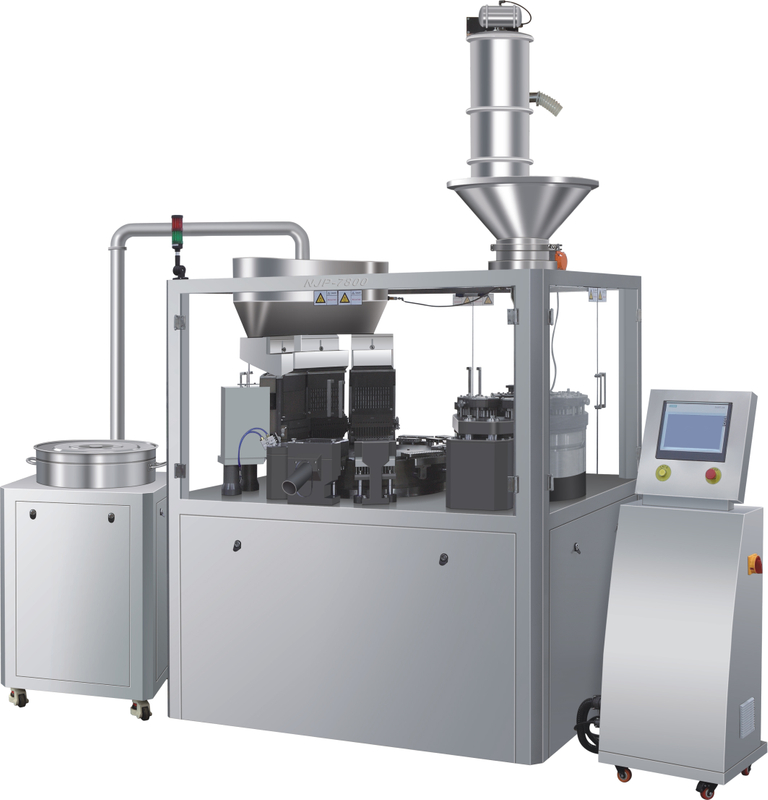
Encapsulation started with manual filling trays, which required operators to load, separate, fill, and lock capsules by hand. While suitable for small compounding pharmacies, this method is entirely impractical for commercial manufacturing due to high variance in fill weights and low throughput. Semi-automatic systems bridged the gap by automating the filling ring rotation and powder delivery, but they still required manual transfer of the capsule rings between the separation, filling, and locking stations. Today, fully automatic systems integrate all steps into a continuous, enclosed rotary or linear process. This evolution minimizes human intervention, reduces contamination risks, and drastically increases hourly output, allowing facilities to run continuous shifts with minimal operator fatigue.
Knowing when to upgrade your equipment dictates your operational efficiency. Facilities typically transition to an automatic system when output needs exceed 5,000 to 10,000 capsules per hour. At this threshold, the labor required to operate manual or semi-automatic machines outweighs the benefits. Automation stabilizes the production cycle. It ensures that every batch meets strict weight uniformity standards while freeing up personnel for other facility tasks like material preparation and quality assurance testing.
Modern equipment design is heavily influenced by global compliance standards. In 2026, machines must adhere to Current Good Manufacturing Practices (cGMP). They must feature food-grade and pharma-grade contact parts, typically 316L stainless steel with specific surface roughness (Ra) values to prevent powder adhesion. FDA regulations require strict data logging and audit trails for weight verification. CE certification ensures the machinery meets European safety and environmental protection standards. These benchmarks dictate that modern machines are verifiable, safe, and designed for rapid washdown procedures.
Not all encapsulation machines are built for the same purpose. They are classified by their production scale, capsule size compatibility, and the types of materials they can process effectively.
Equipment is categorized by its maximum hourly output, which dictates its role in a manufacturing facility.
Pilot-scale & R&D machines: These units process up to 20,000 capsules per hour. They are designed for clinical trials, formulation testing, and small-batch specialty products where material conservation is a priority.
Medium-capacity production machines: Ranging from 20,000 to 40,000 capsules per hour, these are the workhorses for mid-sized nutraceutical brands and regional pharmaceutical manufacturers running single-shift operations.
High-speed industrial lines: Built for continuous, high-volume manufacturing, these machines output between 80,000 and 120,000+ capsules per hour. They feature advanced automation, multiple dosing stations, and integrated checkweighing systems.
A versatile machine must handle various capsule sizes and materials. Standard tooling accommodates empty hard gelatin capsules as well as HPMC (vegetarian) capsules. Manufacturers design tooling sets that can be swapped out to run different sizes. Standard sizes include 000, 00, 0, 1, 2, 3, 4, and 5. The ability to change tooling quickly without extensive recalibration gives facilities the flexibility to produce multiple product lines on a single machine footprint.

The true capability of an encapsulation machine lies in what it can put inside the shell.
Powder filling: The most common application. Machines must handle standard free-flowing powders, cohesive powders, and sticky formulations without clogging the dosing discs.
Pellet and granule filling: The dosing mechanism must transfer fragile pellets into the capsule without crushing them, preserving their enteric coatings or sustained-release properties.
Combination filling: Advanced machines feature multiple dosing stations. They can fill a single capsule with a combination of micro-tablets, liquids, powders, and pellets, enabling complex multi-phase drug delivery systems.
Understanding how the machine operates requires looking at the continuous, station-by-station cycle. Most modern machines utilize a rotary turret design where capsules move through a series of dedicated stations driven by a central indexing cam.
Empty capsules are loaded into a bulk hopper. The machine feeds them into a delivery magazine. Using a series of mechanical fingers and guide slots, the machine rectifies the capsules so they are all oriented in the same direction. They are deposited into the tooling segments with the caps facing up and the bodies facing down.
Once seated in the segments, the machine applies a vacuum from below. This vacuum pulls the capsule body down into the lower segment while the cap remains in the upper segment. The upper and lower segments then physically separate, preparing the body for filling.
Sensors scan the segments to ensure all capsules have separated correctly. If a capsule fails to separate, or if an empty shell is loaded upside down, the machine detects the fault. Advanced models feature an early rejection system at this stage to eject the faulty shell before formulation is wasted.
This is the phase where the active ingredients are introduced. The lower segment containing the capsule bodies moves under the dosing station. Depending on the machine's design, powder is compressed into a slug and inserted, or pellets are dropped volumetrically into the open bodies. Precision here dictates the final product quality and batch uniformity.
Before the capsule is closed, another set of sensors checks the filled bodies. If the machine detects a missing capsule body, an unseparated cap, or a severe dosing error, mechanical pins push the defective components out of the segment into a rejection bin.
The upper segment holding the caps and the lower segment holding the filled bodies realign. Mechanical pins push upward from the bottom, forcing the capsule bodies into the caps. The pressure snaps the locking rings of the capsule shell together, creating a secure, tamper-evident seal.
The fully locked capsules move to the discharge station. Ejector pins push them upward and out of the tooling segments. They slide down a discharge chute, typically feeding directly into a capsule polishing machine and a metal detector for final quality assurance.
Before the empty segments rotate back to Station 1, they pass over a cleaning station. High-pressure compressed air and strong vacuum suction remove any residual powder, dust, or capsule fragments. This ensures the tooling is completely clean for the next cycle, preventing cross-contamination and mechanical jams.
The heart of any encapsulation process is the dosing system. The physical characteristics of your formulation dictate which dosing technology you must use to achieve target fill weights.
Tamping pin systems are the most widely used mechanism for powder filling. The powder is fed into a dosing disc that contains multiple cavities. A set of tamping pins compresses the powder inside these cavities over several stages, usually five tamping stations. This progressive compression forms a solid powder plug, or slug. At the final station, a transfer pin pushes the completed slug into the empty capsule body. This method is highly effective for cohesive formulations and supports very high-speed operations.

Dosator technology uses a hollow tube with an internal piston. The tube plunges into a rotating bed of powder. The powder is forced into the cavity of the tube, and the internal piston compresses it slightly to form a plug. The dosator then lifts, moves over the empty capsule, and the piston pushes the plug out. Dosators are exceptionally precise. They are ideal for micro-dosing, dry powder inhalers (DPIs), and non-cohesive, free-flowing materials.
Feature | Tamping Pin System | Dosator System |
|---|---|---|
Best Application | Cohesive powders, standard blends | Micro-dosing, free-flowing powders |
Compression Method | Progressive tamping in a rotating disc | Single-stage piston compression |
Production Speed | Very High (up to 120,000+/hour) | Moderate to High |
Operational Flexibility | Handles a wide range of standard powders | Excellent for very low fill weights |
Maintaining accurate fill weights is a strict regulatory requirement. Modern machines utilize closed-loop feedback control systems. They continuously monitor the filling process and automatically adjust the dosing parameters, like tamping pin depth or powder bed height, if weights begin to drift. Facilities use statistical sampling, where a percentage of capsules are weighed periodically. High-end lines now integrate 100% gravimetric checkweighing, where every single capsule is weighed inline, and any capsule outside the acceptable variance is automatically rejected.
Even the most advanced equipment requires regular maintenance and troubleshooting to prevent downtime. Understanding common faults helps operators resolve issues quickly on the floor.
If capsules are not separating, the primary culprit is usually a weak vacuum. Check the vacuum pump filters and clear any powder blockages in the lines. Capsule head damage during feeding often results from misaligned rectification blocks or using capsules that have become brittle due to improper storage humidity. Ensure the magazine guides match the exact capsule size being run.
Inconsistent fill weights usually stem from an uneven powder bed. If the powder level in the dosing bowl fluctuates, the tamping pins cannot form uniform slugs. Verify that the powder auger is feeding material consistently. If the formulation is too sticky, it may adhere to the tamping pins. In this case, adjusting the formulation's glidant levels or polishing the tamping pins can resolve the sticking.
High-speed mechanical locking can sometimes cause telescopic capsules, split caps, or dented bodies. Telescoping happens when the capsule body collapses into itself rather than sliding into the cap. This is often caused by misalignment between the upper and lower segments. Check the alignment pins and ensure the closing pressure is calibrated correctly. Over-compressing the capsule will cause the ends to dent.
A rigorous maintenance schedule extends the life of the machine and prevents catastrophic mechanical failures.
Follow strict lubrication schedules for all cams, gears, and moving shafts to prevent premature wear.
Inspect vacuum lines and filters daily to ensure optimal capsule separation pressure.
Ensure the machine design supports Cleaning-In-Place (CIP) or Wash-In-Place (WIP) protocols, especially when handling potent active ingredients.
Standardize tooling changeover procedures. Train operators to torque bolts to specific settings and use alignment gauges to prevent mechanical crashes during startup.
Selecting the correct equipment requires a thorough analysis of your current production needs and future growth projections.
Match your target daily yield to the machine's capacity. Calculate your required output by considering shift lengths and expected downtime for cleaning and changeovers. Buying a machine with a capacity exactly matching your current needs leaves no room for growth. Always factor in a 20% to 30% buffer for future volume increases to avoid bottlenecking your packaging lines.

You must analyze your powder's flowability. Use metrics like the angle of repose and the Carr index. If your powder flows poorly, you will likely need a tamping pin machine with strong agitation capabilities. If you are filling delicate pellets, you need a specialized volumetric pellet feeder that relies on gravity rather than compression to prevent crushing the active ingredients.
If your facility produces many different products, changeover time is a critical metric. Look for modular machine designs. Quick-release tooling, tool-less adjustments, and lightweight segment blocks significantly reduce the time it takes to switch from a size 0 capsule to a size 2 capsule. Faster changeovers directly increase your overall equipment effectiveness (OEE).
Evaluate your cleanroom floor space. Ensure you have adequate room not just for the machine, but for the operator to move around it safely. Verify utility connections, including compressed air quality, vacuum strength, and electrical requirements. If you are processing highly potent compounds, you must integrate containment options. Look for machines rated for Occupational Exposure Bands (OEB) 3 to 5, which feature sealed doors, glove ports, and negative pressure environments.
The machine is only as good as the company that builds and supports it. Evaluating suppliers is just as important as evaluating the technical specifications.
The market in 2026 features a mix of established European, American, and Asian manufacturers. Top suppliers provide robust machines tailored for both the pharmaceutical and nutraceutical sectors. When reviewing suppliers, look at their installed base and ask for references from facilities running similar formulations to verify real-world performance.
Downtime ruins production schedules. Assess the supplier's technical support infrastructure. Do they offer remote diagnostics to troubleshoot software issues instantly? Ensure they conduct thorough Factory Acceptance Testing (FAT) before shipping and Site Acceptance Testing (SAT) upon installation. Local spare parts availability is mandatory; waiting weeks for a replacement cam from overseas halts production entirely.
For pharmaceutical applications, the machine must come with comprehensive validation documentation. The supplier should provide complete Installation Qualification (IQ), Operational Qualification (OQ), and Performance Qualification (PQ) protocols. Furthermore, the machine's software must comply with 21 CFR Part 11, ensuring all electronic records, batch reports, and audit trails are secure and unalterable.
Investing in automation transforms facility operations. The focus shifts from manual labor management to process optimization and waste reduction.
Initial capital expenditures include the base cost of the machine, specialized tooling sets for different capsule sizes, and facility modifications required for installation. You must also account for the costs associated with validation, FAT, SAT, and initial operator training. Properly budgeting for these upfront costs ensures a smooth deployment without unexpected financial strain.
Automation significantly alters your operational expenditures. While utility costs for compressed air and electricity may rise, these are offset by a massive reduction in labor overhead. Automated systems allow facilities to run continuous shifts with minimal supervision. Furthermore, precise dosing mechanisms mitigate raw material waste, which is a major cost-saving factor when processing expensive active pharmaceutical ingredients.
Estimating the payback period requires comparing the increased throughput and reduced waste against the initial CapEx. Facilities transitioning from manual or semi-automatic setups to fully automatic systems typically see a return on investment within 12 to 18 months, depending on production volumes and the value of the encapsulated product. Faster changeovers and reduced cleanroom downtime further accelerate this timeline.
Selecting the right automatic capsule filling machine is about more than increasing production speed—it requires matching the equipment to your formulation characteristics, production goals, quality standards, and future expansion plans. A well-planned investment in the right technology can improve product consistency, reduce operating costs, and create a more efficient and reliable pharmaceutical manufacturing process.
To ensure a successful implementation, consider the following recommendations:
Evaluate your actual production requirements and include a 20–30% capacity buffer for future growth.
Test your formulation with different dosing technologies to determine the most suitable filling system.
Verify your facility's utilities, cleanroom environment, and production layout before installation.
Choose a supplier that provides comprehensive validation documentation, local technical support, and long-term spare parts availability.
With extensive experience in pharmaceutical equipment manufacturing, TIANHONG has become a trusted global provider of capsule filling machines and complete pharmaceutical production solutions. Leveraging advanced automation technology, precision engineering, and strict quality management, the company delivers reliable equipment that complies with international GMP standards while helping pharmaceutical and nutraceutical manufacturers improve production efficiency, dosing accuracy, and product consistency.
From laboratory-scale capsule filling systems to high-speed fully automatic production lines, TIANHONG offers customized equipment design, engineering consultation, installation and commissioning, validation support, operator training, and responsive after-sales service. With a strong commitment to innovation and customer success, the company enables manufacturers worldwide to reduce production costs, increase operational efficiency, and achieve sustainable long-term business growth.
A: A tamping pin machine compresses powder progressively in a dosing disc to form a plug, making it ideal for cohesive powders. A dosator uses a hollow tube and piston to plunge into a powder bed, which is highly precise and better suited for micro-dosing and free-flowing materials.
A: You must clean the machine thoroughly between every product changeover to prevent cross-contamination. Additionally, daily maintenance cleaning of the tooling segments and vacuum lines is required to maintain optimal performance and prevent mechanical jams.
A: Yes. Automatic machines use interchangeable tooling sets. By swapping out the upper and lower segments, dosing discs, and alignment pins, a single machine can process multiple capsule sizes, typically ranging from size 000 down to size 5.
A: Telescoping usually occurs when the upper and lower tooling segments are misaligned, or if the locking pins are applying too much pressure. It can also happen if the capsule shells are brittle due to improper storage conditions.
A: These machines require a stable electrical supply, high-quality compressed air for cleaning and pneumatic controls, and a strong industrial vacuum system to separate the capsules and clean the segments during operation.
