

Views: 0 Author: Site Editor Publish Time: 2026-09-21 Origin: Site


Nutraceutical manufacturers face tightening margins and strict quality standards. Production efficiency and batch consistency drive competitive advantage on the plant floor. Scaling capsule production requires balancing high throughput with precise dosing, material versatility, and regulatory compliance. Plant managers often face a difficult choice between heavy capital expenditure and ongoing labor costs. This guide provides a technical evaluation framework for selecting the right equipment. We break down automation levels, mechanical capabilities, and implementation realities to ensure a high-return purchasing decision. Integrating reliable Capsule Filling Machines optimizes your manufacturing floor and keeps production running smoothly.
Match automation levels (semi-automatic vs. fully automatic) directly to specific yield requirements, labor availability, and 3-5 year growth projections.
Prioritize machines with rapid, tool-less changeovers to accommodate diverse capsule sizes (from 00 to 5) and minimize production downtime between product runs.
Evaluate dosing mechanisms based on the specific physical characteristics of your fill materials (hygroscopic powders, abrasive botanicals, fragile pellets, or liquids) to ensure weight uniformity and reduce raw material waste.
Factor in cGMP compliance, ease of cleaning validation, OEM after-sales support, and Factory Acceptance Testing (FAT) beyond the initial purchase price.
Table of Contents
Evaluating equipment requires looking past the theoretical maximum speed printed on a spec sheet. A machine rated for 100,000 capsules per hour means little if the defect rate sits at five percent. Actual usable yield dictates your daily production capacity. Defect rejection systems discard improperly filled or damaged capsules, but high rejection rates severely impact your bottom line and waste valuable production time. Operators must monitor statistical process control data to ensure the machine maintains optimal yield rates throughout a long shift.
Weight variation presents another significant challenge on the production floor. Inconsistent dosing leads directly to raw material waste. Nutraceutical ingredients, like specialized herbal extracts or patented probiotics, carry high procurement costs. Overfilling capsules cuts directly into profit margins. Underfilling triggers label claim compliance failures during quality audits. Regulatory bodies strictly monitor weight uniformity across product batches. Your equipment must maintain tight tolerances across entire production runs. Precision dosing mechanisms are non-negotiable for commercial viability and brand reputation.
To understand the gap between theoretical speed and actual yield, consider the following operational factors:
Powder Flowability: Poor flow characteristics cause inconsistent filling, triggering automatic weight rejections.
Machine Jamming: Deformed empty capsules can jam the separation station, requiring manual clearing and resetting.
Environmental Humidity: High moisture levels cause powders to clump, bridging the hopper and starving the dosing disk.
Operator Skill: Inexperienced operators may set incorrect tamping pressures, leading to weight drift over time.
Nutraceutical formulations rarely behave like standard pharmaceutical powders. You often process sticky powders, abrasive herbal extracts, or fragile time-release pellets. Each material presents unique flowability challenges based on its particle size distribution and moisture content. Sticky materials bridge in the hopper and clog dosing stations. Abrasive botanicals accelerate wear on tooling components, requiring frequent replacement of tamping pins and dosing disks. Fragile pellets fracture under high tamping pressure, destroying their time-release properties.
Advanced product formulations often require multi-phase filling capabilities. Consumers increasingly demand combination products. You might need to combine a powder and a micro-tablet in a single capsule. Some formulations require a liquid and a pellet combination to isolate reactive ingredients. Assessing a machine's ability to handle these complex fills dictates your future product roadmap. Equipment flexibility allows you to adapt to changing market trends. Dedicated tooling for specific material types ensures consistent processing without damaging the active ingredients.

Manual capsule fillers are designed for small-batch production, formulation testing, and research applications. Operators complete each step manually, including capsule loading, powder filling, and closing. These machines have low investment costs but rely heavily on operator skill, making them unsuitable for large-scale production due to inconsistent filling accuracy and limited output capacity.
Semi-automatic capsule filling machines combine manual operation with automated filling functions. They use vacuum systems for capsule separation and automated dosing mechanisms to improve production efficiency. These machines provide higher output and better consistency than manual models while requiring less investment than fully automatic systems. They are suitable for medium-sized manufacturers that need flexible production with manageable labor requirements.
Large-scale production demands continuous, uninterrupted operation. Fully automatic systems handle every step without manual intervention. They utilize either intermittent or continuous rotary motion. The machine automatically loads empty capsules, separates them, and orients them correctly in the segments. The system executes precise dosing, recombines the halves, closes them securely, and ejects defects. This continuous cycle maximizes daily throughput and minimizes human error.
Return on investment factors heavily favor full automation at scale. The high initial investment is offset by maximum throughput. Minimal labor requirements reduce long-term operational expenses, allowing you to reallocate staff to other areas. Superior batch-to-batch consistency ensures regulatory compliance and product quality. High-volume nutraceutical manufacturers rely on these systems to meet aggressive production quotas. Investing in Capsule Filling Machines for Nutraceutical Production ensures your facility can scale efficiently as market demand increases.
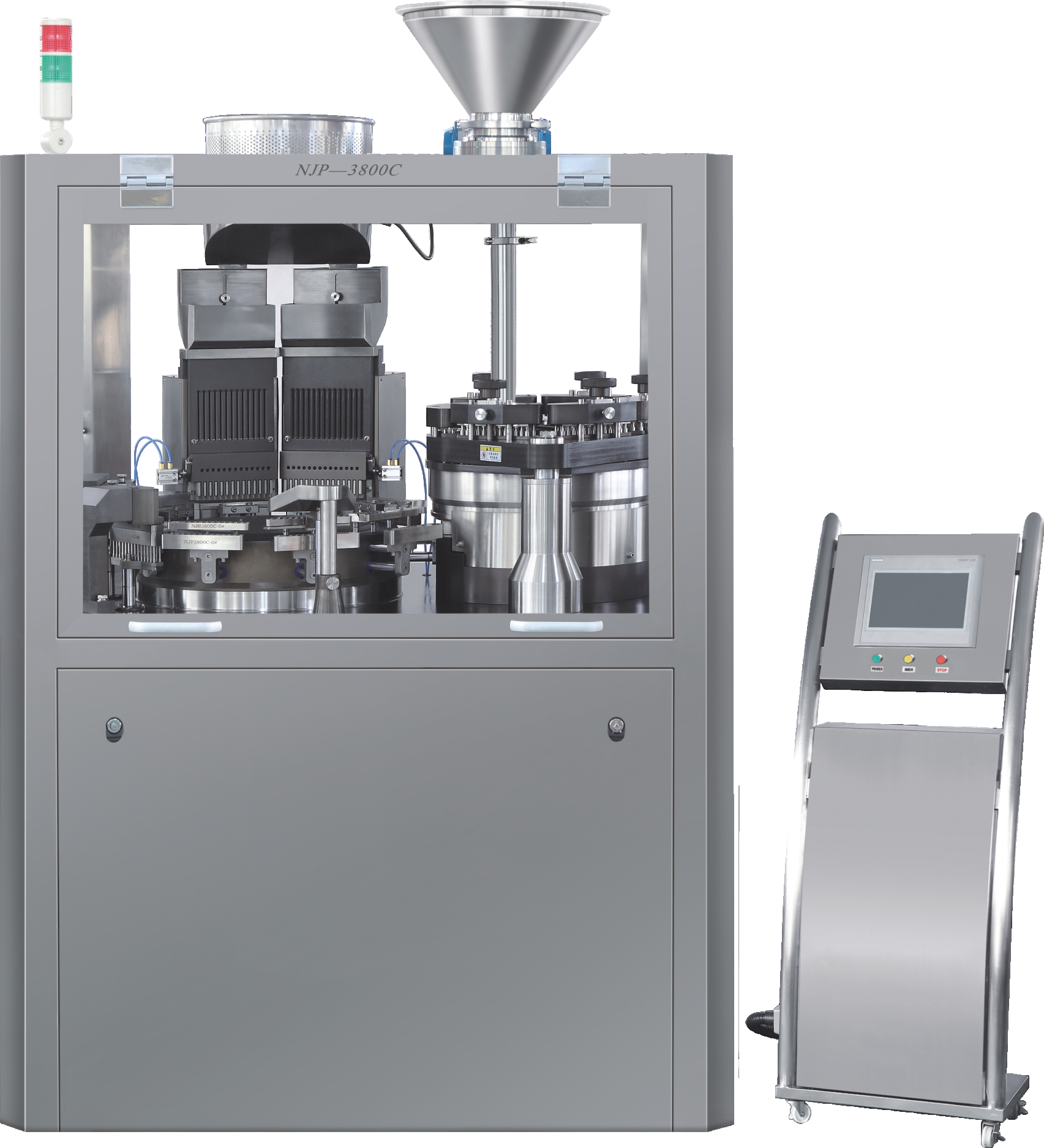
Selecting the right dosing mechanism depends entirely on powder characteristics. Tamping pin systems use a series of pins to compress powder into a solid slug inside a dosing disk. This slug is then transferred into the capsule body. Tamping pins work exceptionally well for cohesive, heavy powders. They provide consistent compression and accurate weights for difficult materials that do not flow easily.
Dosator systems operate differently. A hollow dosator tube plunges into the powder bed, capturing a specific volume. A piston inside the tube slightly compresses the powder before ejecting it into the capsule. Dosators excel with lighter, free-flowing materials. They are also preferred for micro-dosing applications where minimal powder is required. For liquid and semi-solid filling, you need specialized servo-driven pumps. These systems require precise temperature control features to maintain liquid viscosity. Secure sealing mechanisms are mandatory to prevent leaks in liquid-filled hard capsules.
Feature | Tamping Pin System | Dosator System |
|---|---|---|
Best Material Type | Cohesive, heavy, sluggish powders | Free-flowing, light powders, micro-dosing |
Compression Method | Multiple pins compress powder in a disk | Piston compresses powder inside a hollow tube |
Weight Adjustment | Adjusting pin depth and powder bed height | Adjusting piston stroke and powder bed depth |
Maintenance Complexity | Moderate (requires aligning multiple pins) | High (requires precise tube and piston calibration) |
Fast tooling changeovers help reduce downtime and improve production efficiency when switching between different capsule sizes or products. Modern capsule filling machines use modular components and quick-release designs to simplify adjustments. Easy changeover procedures allow operators to replace tooling, adjust settings, and restart production faster, improving overall equipment efficiency.
Integrated inspection systems help maintain capsule quality during production. Sensors can detect issues such as empty capsules, damaged shells, or incorrect filling, while automatic rejection systems remove defective products before packaging. Advanced checkweighers also monitor capsule weight and adjust filling parameters automatically to maintain consistent quality.
Selecting a capsule filling machine requires more than comparing production speed. Buyers should evaluate energy consumption, air requirements, drive systems, maintenance needs, and long-term reliability. Factory Acceptance Testing (FAT) and Site Acceptance Testing (SAT) are important steps to confirm that the machine meets performance requirements before full production.
Capsule filling machines must meet cGMP and FDA requirements to ensure product safety and traceability. Product-contact parts should use 316L stainless steel, while seals and polymers must be food-grade approved materials. Smooth surfaces help prevent powder buildup and simplify cleaning. Modern machines also require secure data recording, user control, and electronic records to support regulatory inspections.
Efficient cleaning is essential for preventing cross-contamination and reducing production downtime. CIP and WIP systems help automate the cleaning process, while easy-access components and tool-free disassembly make maintenance faster. A well-designed machine should allow operators to clean powder pathways thoroughly and switch products safely.
Machine layout and production conditions directly affect capsule filling performance. The equipment should fit the available production space and connect smoothly with upstream and downstream systems. For moisture-sensitive herbal ingredients, humidity control and dust extraction are important to prevent powder clumping, improve flowability, and maintain consistent filling accuracy.
Request a customized equipment demonstration using your specific nutraceutical materials to verify flowability and dosing accuracy.
Execute a rigorous Factory Acceptance Test (FAT) at the vendor's facility before authorizing shipment.
Review OEM service agreements to guarantee domestic parts availability and rapid technician dispatch times.
Standardize your tooling sizes to minimize changeover complexity and reduce spare parts inventory.
A: The machine automatically loads empty capsules into holding rings or segments. A vacuum system separates the caps from the bodies. The dosing station then fills the capsule bodies with precise amounts of powder, pellets, or liquid. Finally, the machine recombines the halves, closes them securely, and ejects the finished capsules.
A: A tamping pin system uses multiple pins to compress powder into a solid slug before transferring it into the capsule. It is ideal for heavy, cohesive powders. A dosator uses a hollow tube to capture and slightly compress a specific volume of lighter, free-flowing powder.
A: For R&D or clinical trials, manual fillers are sufficient. For commercial small batches, a semi-automatic machine is ideal. It offers automated dosing for better weight consistency while keeping upfront costs and facility footprint lower than fully automatic systems.
A: Production rates vary widely based on the machine model and material characteristics. Entry-level automatic machines produce around 12,000 to 24,000 capsules per hour. High-speed commercial units can exceed 100,000 to over 400,000 capsules per hour.
A: Yes, many advanced automatic machines feature modular dosing stations. By swapping out the tooling, a single machine can be configured to fill powders, fragile pellets, or liquids. Some can even perform combination fills, like powder and a micro-tablet in one capsule.
A: Automatic machines use integrated vacuum sensors and optical cameras. They detect if a capsule failed to separate, has a dented cap, or missed the dosing station. The system then uses targeted compressed air to blow the defective capsule into a dedicated reject bin.
