

Views: 0 Author: Site Editor Publish Time: 2026-07-28 Origin: Site


Transitioning from manual benchtop encapsulation to scaled production—or upgrading existing manufacturing lines—requires precise capital equipment evaluation to avoid costly bottlenecks. Mismatched encapsulation machinery leads to high reject rates, inconsistent fill weights, cross-contamination risks, and restricted production scalability. Operators often discover too late that their chosen equipment cannot handle specific powder flow characteristics or requires excessive downtime for routine cleaning. This Capsule Filling Machine Buying Guide provides a technical framework for evaluating equipment, aligning production volume, formulation characteristics, and regulatory compliance with the correct machine architecture. By focusing on mechanical realities rather than theoretical maximums, facility managers and production engineers can specify machinery that integrates reliably into their existing floor plans and operational workflows.

Align Capacity with Reality: Base equipment selection on actual operational yield (accounting for cleaning, changeovers, and maintenance), not just the manufacturer’s peak theoretical speed.
Powder Characteristics Dictate Mechanics: The flowability, bulk density, and stickiness of your formulation must determine the dosing system (e.g., tamping pin vs. dosator).
Factor in Long-Term Operational Costs: Upfront capital expenditure is secondary to the long-term costs of labor, tooling changeovers, spare parts availability, and cleaning validation.
Prioritize Compliance: Ensure equipment meets specific facility requirements, including cGMP standards, 316L stainless steel contact parts, and verifiable audit trails.
Table of Contents
Evaluating production capacity requires differentiating between theoretical machine speed and actual operational yield. Equipment manufacturers list maximum capsules per hour based on continuous running under perfect conditions. Real-world output is significantly lower. You must factor in expected downtime for batch changeovers, cleaning cycles, powder loading, and operator fatigue. A machine rated for 100,000 capsules per hour might only yield 70,000 when accounting for standard operational pauses.
To calculate your true throughput requirements, follow these steps:
Determine your target weekly production volume based on current demand and a 20% growth buffer.
Calculate available machine hours per week, subtracting mandatory breaks, shift changes, and scheduled maintenance.
Subtract estimated time for batch changeovers. If you run three different products a day, you lose several hours to cleaning and tooling swaps.
Divide the target weekly volume by the remaining productive hours to find your required actual hourly yield.
Multiply that actual yield by 1.3 to 1.5 to find the theoretical machine speed you should look for in vendor specifications.
Theoretical vs. Actual Yield Examples | ||||
Theoretical Speed (Capsules/Hr) | Shifts per Day | Products per Shift | Estimated Actual Yield (Capsules/Hr) | Effective Daily Output |
|---|---|---|---|---|
24,000 | 1 (8 hours) | 1 | 19,200 | 134,400 |
48,000 | 2 (16 hours) | 3 | 33,600 | 403,200 |
100,000 | 3 (24 hours) | 1 | 85,000 | 1,870,000 |
Powder behavior directly influences machine selection. Assess how powder flowability impacts the required dosing mechanism. You can measure this using the Carr's Index or Hausner Ratio. Powders that bridge or rat-hole in the hopper will starve the dosing station, leading to underweight capsules. Bulk density and moisture sensitivity also dictate whether a standard tamping system will suffice or if a specialized approach is needed.
Highly cohesive powders require mechanical agitation in the hopper to maintain consistent feed rates. Hygroscopic materials absorb moisture from the air, becoming sticky and clogging tamping pins. If your facility lacks strict climate control, you must select a machine with robust scraping and ejection mechanisms to handle sticky formulations. Additionally, evaluate the need for specialized attachments if you are filling liquids, pellets, or tablets into capsules. Liquid filling requires specialized sealing stations to prevent leakage, while pellet filling demands gentle handling to avoid crushing enteric coatings.

Define the required tooling for standard capsule sizes ranging from Size 000 to Size 5. The physical dimensions of the capsule dictate the volume of powder it can hold, which must align with your target dosage and powder bulk density. Analyze machine compatibility with different capsule materials. Gelatin and HPMC (vegetarian) capsules behave differently during separation and joining.
HPMC capsules possess a higher static charge potential and lower moisture-related brittleness thresholds. This requires specific handling adjustments on automated lines. High static charge causes empty HPMC capsules to stick to the sorting block or fail to drop into the segments properly. Machines running HPMC often need ionizers or specific grounding modifications. Gelatin capsules are more forgiving regarding static but can deform if the machine runs too hot or if the joining pins apply excessive pressure.
Standard Capsule Sizes and Approximate Volumes | ||
Capsule Size | Volume (ml) | Approx. Capacity (mg) at 0.7 g/ml Density |
|---|---|---|
000 | 1.37 | 959 |
00 | 0.91 | 637 |
0 | 0.68 | 476 |
1 | 0.50 | 350 |
2 | 0.37 | 259 |
3 | 0.30 | 210 |
4 | 0.21 | 147 |
Understanding the encapsulation cycle helps identify potential failure points during evaluation. Every machine, regardless of automation level, performs these five basic functions. Evaluating how a specific model handles each stage reveals its mechanical reliability.
Orientation: How reliably the machine positions capsules cap-up, body-down. Poorly machined raceways cause capsules to jam or feed upside down.
Separation: Vacuum-assisted versus mechanical separation of caps and bodies. Insufficient vacuum pressure leaves capsules unseparated, resulting in wasted powder and rejected units.
Dosing: Precise filling of active ingredients into the capsule body. This stage dictates your weight variation and batch uniformity.
Joining/Locking: Alignment and mechanical closure of caps and bodies without crushing or telescoping. Misaligned closing pins cause split capsules and powder spills on the machine deck.
Ejection: Discharge of finished, locked capsules and separation of non-separated defectives. The ejection chute must clear the machine deck efficiently to prevent pile-ups.
Manual systems segment into two main categories based on hole count and intended use. Micro-scale systems featuring 100-hole plates are sized for home use, small-batch herbal prep, or early-stage R&D. They prioritize ease-of-use with clear instructional manuals. Professional clinical systems feature 200–800 hole plates designed for compounding pharmacies and pilot clinical trials, prioritizing robust build quality and GMP-compliant metals.
Compare hole count efficiency against labor costs and assess plate material durability. BPA-free acrylic plates are common for entry-level systems but scratch easily and degrade under harsh cleaning chemicals. Lightweight aluminum offers better durability but can oxidize if not properly maintained. Stainless steel plates are the standard for GMP environments due to their chemical resistance and longevity. Limitations of manual systems include high labor dependency, variable fill weight consistency based on operator technique, lack of automated validation, and strict scalability ceilings.
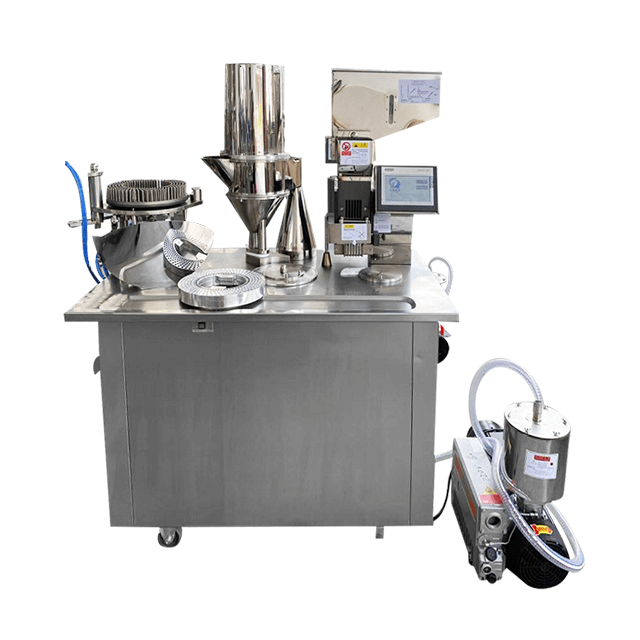
Semi-automatic machines serve mid-scale production and contract manufacturing organizations handling multiple short runs. They balance capital expenditure with increased output. Evaluation requires assessing the auger filling mechanism and the ergonomics of manual ring transfer. The operator loads empty capsules into a ring, which the machine automatically separates. The operator then moves the ring to the filling station, where an auger drives powder into the bodies. Finally, the operator moves the ring to the locking station.
While they reduce physical strain compared to manual plates, they still require a dedicated operator to pace production and manage the locking station. The speed of a semi-automatic machine depends entirely on the operator's dexterity and stamina. When evaluating these machines, check the weight of the capsule rings. Heavy stainless steel rings cause operator fatigue over an eight-hour shift. Look for machines with variable speed augers and adjustable rotary tables to fine-tune the fill weights for different powder densities.
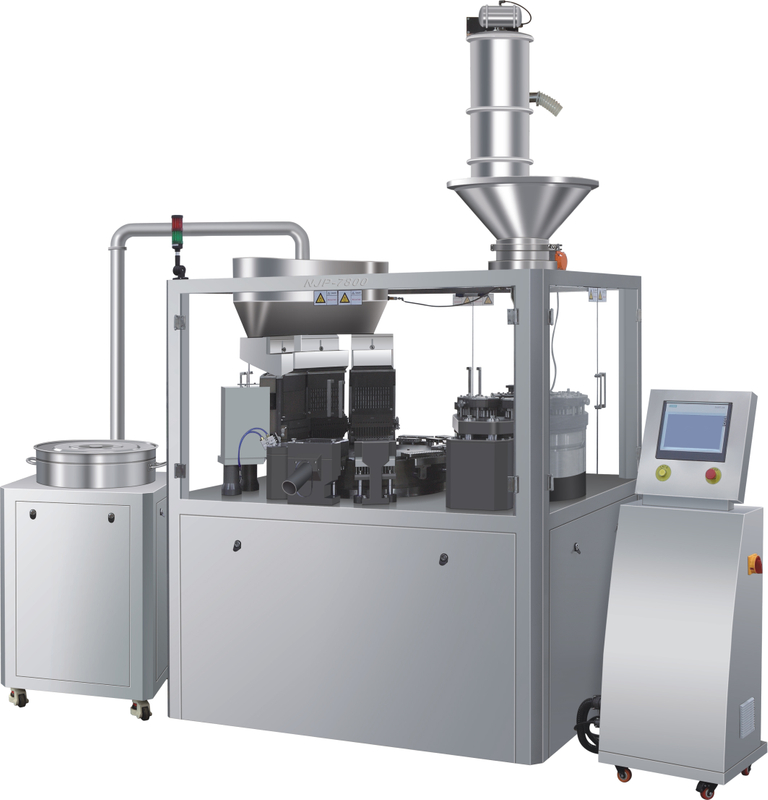
Fully automatic capsule fillers are built for high-volume commercial manufacturing and continuous production environments. These machines handle orientation, separation, dosing, locking, and ejection without operator intervention. Key evaluation criteria include enclosed dosing, integrated weight checking, automatic rejection of unseparated capsules, and minimal operator handling.
The trade-offs involve high initial capital investment and more complex, time-consuming cleaning validation procedures. Fully automatic machines require precise environmental controls. Variations in temperature and humidity cause powder to stick or capsules to become brittle, leading to jams. You must also evaluate the machine's control system. Modern HMIs should offer recipe management, allowing operators to save specific settings for different products, reducing setup time and minimizing human error during changeovers.
The dosing mechanism must match your powder profile. Tamping pin systems rely on a powder bed and tamping punches to form a slug, making them ideal for standard powders in general nutraceutical and pharmaceutical use. The powder flows into a dosing disc, and a series of pins compress it over several stations. The final pin pushes the formed slug into the capsule body. This method handles a wide range of powder densities and is generally easier to maintain.
Dosator systems are better suited for micro-dosing, highly cohesive or sticky powders, and specific clinical applications where precision weight control is paramount. A dosator uses a hollow tube equipped with an internal piston. The tube plunges into the powder bed, capturing a specific volume. The piston compresses the powder slightly, and the tube transfers the dose to the capsule, where the piston ejects it. Dosators excel at filling very small amounts of active pharmaceutical ingredients without the need for excessive excipients.
Tamping Pin vs. Dosator Comparison | ||
Feature | Tamping Pin System | Dosator System |
|---|---|---|
Best For | Standard powders, high volume | Micro-dosing, cohesive powders |
Mechanism | Compresses powder in a disc | Plunges tube into powder bed |
Maintenance | Straightforward, fewer moving parts | Complex, requires precise calibration |
Flexibility | Good for varied bulk densities | Excellent for low fill weights |
Assess the time, tools, and complexity required to switch between capsule sizes. A machine that takes four hours to change over will severely bottleneck a facility running multiple products per shift. Evaluate the cost of additional format parts, such as dosing discs, tamping pins, and capsule segments. Some manufacturers design their machines with quick-release components that require no hand tools, drastically reducing changeover times.
Consider the lead time for replacement parts to minimize production downtime during format changes. If the manufacturer ships parts from overseas with a six-week lead time, a damaged dosing disc will halt production. Look for vendors with domestic parts inventory. When evaluating a machine, ask the vendor to demonstrate a full tooling changeover during the Factory Acceptance Test. Time the process and note how many specialized tools are required.
Review the physical dimensions, floor load capacity, power requirements, and compressed air or vacuum specifications. Automatic capsule fillers are heavy and vibrate during operation. Ensure your facility floor can support the dynamic load. Verify that your electrical drops match the machine's voltage and phase requirements. Mismatched power requires expensive transformers.
Consider integration capabilities with upstream equipment like mixers and blenders, as well as downstream equipment including capsule polishers, metal detectors, and blister packaging lines. The discharge height of the capsule filler must align with the intake hopper of the capsule polisher. If the filler discharges too low, you will need a vacuum transfer system or an inclined conveyor to move the capsules to the next stage. Evaluate the machine's dust extraction ports. Proper dust collection keeps the machine deck clean, reduces wear on moving parts, and protects operators from airborne particulates.
Verify the use of 316L stainless steel for all product-contact parts and FDA-approved food-grade seals. Lower grades of stainless steel, such as 304, are susceptible to pitting and corrosion when exposed to harsh cleaning chemicals or high-chloride formulations. Pitting creates microscopic crevices where bacteria and cross-contaminants hide. Inspect the machine's material certificates to confirm the steel grade.
For pharmaceutical applications, evaluate software compliance for electronic records and signatures to ensure verifiable audit trails. The machine's control system must comply with 21 CFR Part 11. This requires individual user logins, role-based access control, and an unalterable log of all parameter changes and alarms. If an operator adjusts the fill weight during a run, the system must record who made the change, when it occurred, and the previous and new values.
Evaluate machine accessibility for Clean-In-Place or Wash-In-Place procedures. Identify potential blind spots in the machine design where cross-contamination risks are highest. Look for smooth welds, sloped surfaces that promote drainage, and minimal exposed threads. Threads trap powder and are notoriously difficult to swab clean during validation.
Proper cleaning validation is critical for maintaining product safety and regulatory compliance. The machine should break down easily to expose all powder contact surfaces. Heavy components like the dosing disc and rotary table should have lifting mechanisms or swing-arm supports to allow operators to clean beneath them without risking injury. Review the manufacturer's recommended cleaning protocols and ensure they align with your facility's standard operating procedures.

Analyze the upfront machine cost against projected labor savings, reduced material waste, and energy consumption. A cheaper machine often costs more over a five-year period due to frequent breakdowns, expensive proprietary spare parts, and excessive powder waste. High-quality machines feature precise dosing mechanisms that keep fill weights tight, reducing the amount of active ingredient lost to rejected capsules.
Calculate the cost of compressed air and vacuum generation. Pneumatic systems consume significant energy. Machines optimized for lower air consumption reduce utility bills. Additionally, factor in the cost of routine maintenance consumables, such as vacuum filters, lubrication oil, and replacement seals. Request a recommended spare parts list from the vendor and price out the components you will need to replace annually.
Complex Human-Machine Interfaces and mechanical adjustments can lead to operator errors, inconsistent batches, and extended downtime. If the control panel is unintuitive, operators will struggle to clear alarms or adjust fill weights accurately. Mitigate these risks by prioritizing vendors offering comprehensive on-site training, highly visual troubleshooting guides, complete installation and operational qualification documentation, and responsive technical support.
A robust training program should cover mechanical setup, HMI navigation, routine cleaning, and basic troubleshooting. Operators need to know how to identify the root cause of common issues, such as split capsules or fluctuating weights. Ensure the vendor provides detailed manuals with exploded diagrams and part numbers to simplify the ordering process for replacement components.
Selecting the right capsule filling machine requires balancing production capacity, formulation characteristics, equipment flexibility, regulatory compliance, and long-term operating costs. A thorough technical evaluation before purchasing will help manufacturers reduce production risks, improve product quality, and maximize the return on equipment investment.
To support a successful equipment selection process, consider the following recommendations:
Define your formulation characteristics and actual production capacity requirements before contacting equipment suppliers.
Evaluate capsule filling machines based on dosing technology, cGMP compliance, and tooling flexibility.
Request Factory Acceptance Testing (FAT) using your own formulations to verify equipment performance.
Visit reference installations or review real production cases to assess long-term equipment reliability.
Calculate the total cost of ownership, including maintenance, spare parts, labor savings, and future production expansion.
With extensive expertise in pharmaceutical machinery manufacturing, TIANHONG has earned the trust of pharmaceutical companies, nutraceutical manufacturers, and contract manufacturing organizations around the world. By combining advanced automation technology, precision engineering, and strict quality management, the company delivers reliable capsule filling equipment and complete pharmaceutical production solutions that comply with international GMP standards and support efficient, high-quality manufacturing.
From laboratory-scale capsule filling machines to fully automatic high-speed production lines, TIANHONG provides customized equipment design, engineering consultation, installation and commissioning, technical training, and comprehensive after-sales support. Through continuous innovation and customer-focused service, the company helps manufacturers improve productivity, reduce operating costs, ensure consistent product quality, and achieve sustainable long-term business growth.
A: Manual machines require operators to perform all steps, including separation, filling, and locking, using hand-operated plates. Semi-automatic machines automate the filling and separation processes but still require an operator to manually transfer the capsule rings between the filling and locking stations.
A: Choose based on your batch size and labor capacity. A 100-hole filler is suitable for R&D or very small batches. For compounding pharmacies or pilot runs, 400 to 800-hole plates offer better efficiency, though they require more physical effort to operate continuously.
A: Yes, but adjustments are often necessary. HPMC capsules have a higher static charge and different moisture tolerances than gelatin. Automated machines may require specific tooling or environmental controls to handle HPMC capsules without causing separation or locking issues.
A: Changeover times vary by machine design but typically range from 45 minutes to 2 hours for a fully automatic machine. Machines designed with quick-release components and minimal tool requirements can achieve faster changeovers.
A: Poorly flowing powders cause inconsistent fill weights. Powders with good flowability work well with standard tamping pin systems. Cohesive or sticky powders often require a dosator system or specialized agitation to ensure accurate and consistent dosing.
A: Daily maintenance includes thorough cleaning of all contact parts, inspecting vacuum filters, checking pneumatic connections, lubricating moving components as specified, and verifying the alignment of the dosing and locking stations.
A: Tamping pin machines use a series of pins to compress powder into a slug within a dosing disc before transferring it to the capsule. Dosator machines use a hollow tube that plunges into a powder bed to capture a specific volume, making them better for micro-dosing and cohesive powders.
