

Views: 0 Author: Site Editor Publish Time: 2026-11-09 Origin: Site


A pharmaceutical capsule filling machine doses a formulation into capsule shells and closes them for downstream handling and inspection. Common hard capsule applications include powder blends, granules, coated pellets, and compatible liquids or semisolids. The right machine depends on how the formulation must be handled, how the dose is defined, and what the finished capsule must demonstrate during testing.
Start with the dosage form and its critical quality attributes. For a low-dose powder blend, the main concern may be consistency of active ingredient content. For coated pellets, preserving the coating during filling may be essential to the intended release profile. For liquid-filled hard capsules, accurate dosing is only part of the process. Shell compatibility and resistance to leakage also need to be verified.
Table of Contents
Powder filling is a common hard capsule application. The dosing system measures a quantity of blend and transfers it into the capsule body. Bulk density, flow, and compressibility affect how much material fits in the shell and how consistently it reaches the dosing station. A fluffy powder and a dense blend can behave differently even when their target fill weights are the same.
During equipment selection, give the supplier the capsule size, target net fill weight, and available information about the blend. Ask for a trial that includes startup, stable operation, and a normal material refill. Those points help reveal variation that a short demonstration may miss.
Granules and pellets may require a different dosing arrangement from fine powders. Where pellets carry a functional coating, the filling process must be evaluated for damage during feeding, dosing, and discharge. Check whether the machine can handle the required particle size range and whether the material separates by size or density as it moves through the feed system.
For a multiparticulate formulation, identify what the capsule must contain and how the dose will be verified. A consistent total fill weight can still conceal a change in the proportion of different components. Where release performance depends on a coating, include the relevant product testing in the evaluation.
Some pharmaceutical formulations use liquid or semisolid fills in hard capsule shells. Assess viscosity at the intended filling temperature, compatibility with the shell, dosing repeatability, and leakage risk. Where a sealing step is required, review filling and sealing as one process and check the capsule after the agreed handling or storage conditions.
Tianhong lists its NJY-600C liquid hard capsule filling machine separately from its automatic capsule filling machine range. Confirm the dosing and sealing scope in the quotation for your specific formulation.
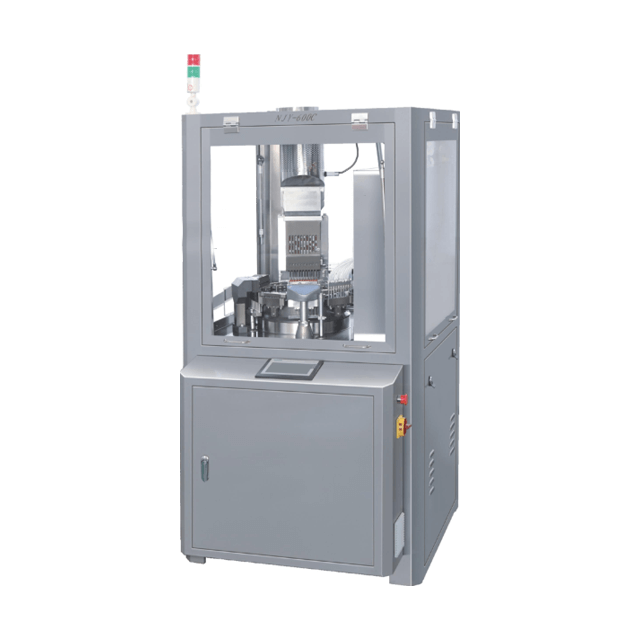
Start with the shell material and size, target dose, and the physical properties of the fill. If the formulation is still being developed, identify the range the equipment is expected to handle. Ask the supplier which size-specific tooling and dosing parts are included and what would need to change for a second product.
Application | What to specify | What to check during a trial |
|---|---|---|
Powder blend | Shell size, target net fill weight, and blend flow or density | Individual fill weights, shell closure, and variation after refill |
Granules | Particle size range, flow behavior, and target dose | Dosing consistency, feed stability, and buildup at contact surfaces |
Coated pellets | Particle size, coating sensitivity, and any component ratios | Pellet damage, segregation, and product-specific release performance where relevant |
Liquid or semisolid | Viscosity at filling temperature, shell compatibility, and sealing needs | Fill quantity, closure or seal integrity, and leakage under agreed conditions |
Ask the supplier to demonstrate the dosing system on representative materials. A blend that behaves well in a full hopper may feed differently as the level drops. A pellet mixture can also change as particles move through the feed path. Record the material lot, settings, sampling time, and feed conditions so the results can be interpreted later.
For higher-volume hard capsule production, Tianhong’s NJP-3800C automatic capsule filling machine is one model to review. Request the exact tooling and dosing configuration and ask the supplier to demonstrate sustained output on the formulation and shell you plan to use.
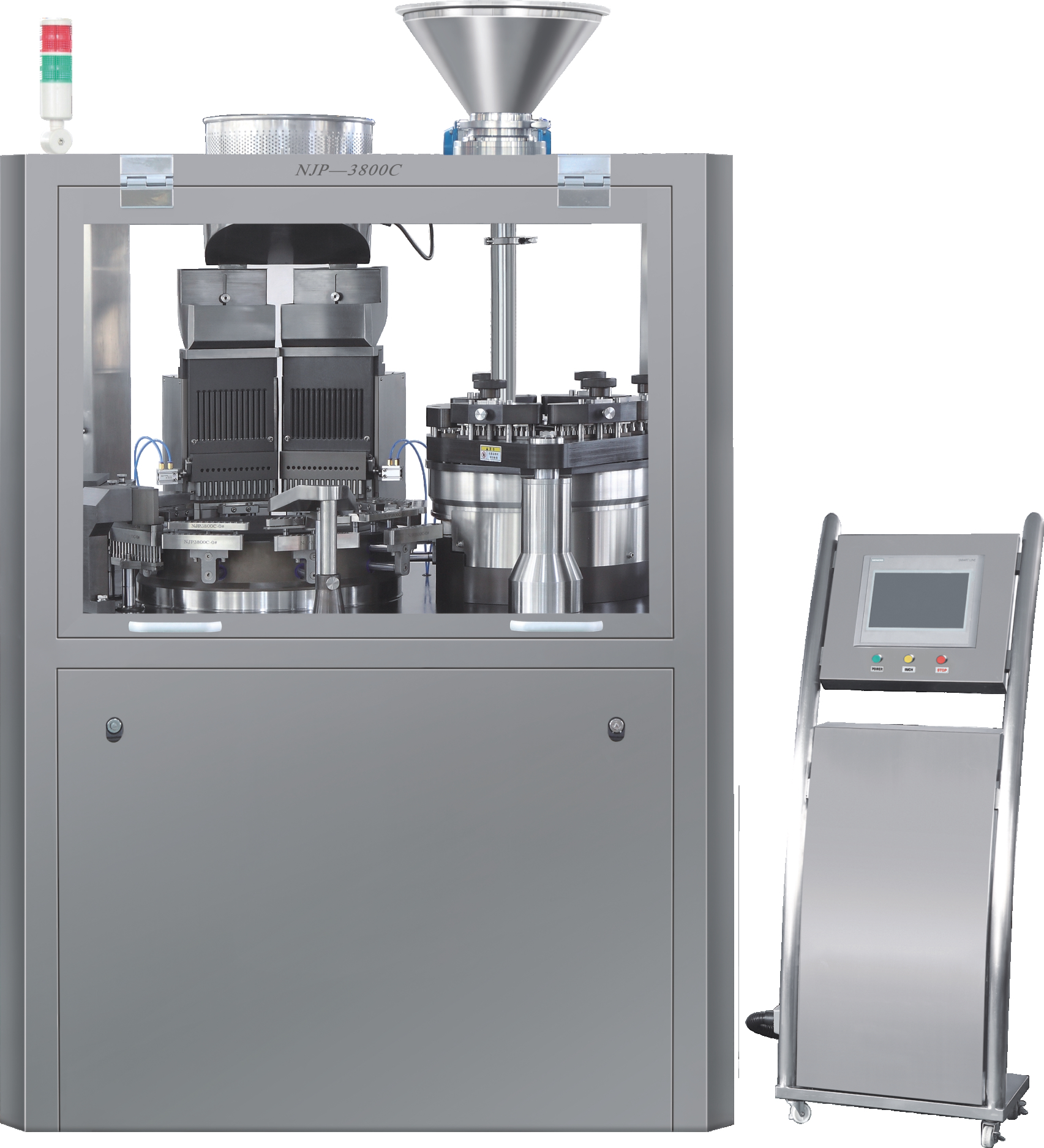
Net fill weight measures the amount of material in a capsule. It cannot establish on its own that the active ingredient is distributed consistently through the blend. Define the in-process weight checks and the finished-product tests separately, using the product specification and applicable methods.
Also inspect shell condition and closure. Check for splits, dents, incomplete locking, or residue on the capsule exterior. If the line includes rejection equipment, agree on which defect conditions it detects and demonstrate how rejected capsules are separated and accounted for.
Ask to see which product-contact parts can be removed, how they are reassembled, and which areas remain difficult to inspect. Where products share a machine, define how the site will assess residue and carryover risk. A timed changeover should include the cleaning and inspection steps required before the next product can run.
The supplier can provide equipment drawings, part lists, and cleaning instructions for the proposed configuration. The manufacturer’s quality and engineering teams should use that information when developing their own procedures and deciding what qualification and validation work the process requires.
Review the connection between the filler and any polishing, inspection, counting, or packaging equipment. If downstream inspection runs slower than the filler, the higher filling speed may create a queue without raising finished output. Define how capsules will be transferred, identified, and handled if either machine stops.
Measure accepted output over an agreed period and specify where it will be counted. Capsules discharged from the filler and capsules accepted after inspection are different measurements. Use the same counting point when comparing proposals.
Dosage form and fill. Identify the powder, granule, pellet, liquid, or semisolid. Provide the target fill and any handling limits the supplier needs for the trial.
Capsule shell. Specify size, shell material, and the production shell or sample reference.
Production requirements. State batch size, target accepted output, typical changeover frequency, and planned downstream equipment.
Quality criteria. Define individual fill-weight limits, capsule appearance, closure or seal checks, and any additional tests the product requires.
Documentation. Request the configuration list, product-contact parts list, operating and cleaning instructions, and agreed test records.
A factory acceptance test can verify the supplied configuration, machine functions, and agreed performance under the trial conditions. Record the materials, tooling, settings, test duration, sampling points, and results. If a surrogate formulation is used, document which conclusions still need to be checked with the production material.
At the installation site, confirm the utilities, downstream interfaces, and operating procedures. The equipment supplier’s trial can inform the site’s qualification work. The pharmaceutical manufacturer determines how the installed process will be qualified, validated, and monitored for the intended product.
Hard capsule filling systems can be configured for powders, granules, pellets, and some liquids or semisolids. Confirm the shell, dosing mechanism, and any sealing requirements for the actual formulation.
Some machines support both with appropriate dosing parts and setup changes. Ask which options are available on the exact model and test the material for dose variation, segregation, or damage.
Fill weight shows how much material is present. Active ingredient consistency also depends on the formulation and its distribution. Use the tests specified for the product alongside in-process weight checks.
They are separate processes. Liquid hard capsule filling doses a compatible formulation into a preformed hard shell and may include sealing. Softgel manufacturing forms and seals the soft capsule around the fill during production.
Request a model-specific quotation, tooling and dosing details, product-contact parts information, cleaning instructions, and an agreed trial plan. Supply representative shells and formulation information so the supplier can demonstrate the application you intend to run.
Discuss your pharmaceutical capsule filling application with Tianhong Machinery. Share your capsule shell, formulation type, target fill, batch size, and acceptance requirements. If the machine must work with existing polishing, inspection, or packaging equipment, include those details in your inquiry.
