

Views: 0 Author: Site Editor Publish Time: 2026-07-28 Origin: Site


Transitioning from manual capsule trays to mechanized production represents a critical growth milestone for pharmaceutical and nutraceutical manufacturers. Selecting the wrong level of automation can bottleneck operations or trap capital in underutilized assets. Facility managers and production engineers must balance upfront capital expenditure with ongoing labor requirements, throughput demands, and the frequency of product changeovers.
Understanding the technological evolution from low-yield manual capsule trays to motorized semi-automatic systems and fully closed automatic systems is essential. Manual trays often result in high weight variance and low output, making them unsuitable for commercial scaling. Upgrading to mechanized systems introduces precision, speed, and regulatory compliance.
To make an evidence-based procurement decision, manufacturers must evaluate their specific batch sizes, facility constraints, and formulation characteristics against the operational realities of both machine types. Choosing an Automatic vs Semi Automatic Capsule Filling Machine dictates your production ceiling, labor allocation, and overall operational agility.
Throughput vs. Flexibility: Semi-automatic machines offer superior agility for high-mix, low-volume (HMLV) production and frequent changeovers, while fully automatic machines dominate in continuous, high-volume environments.
Labor Dependency: Semi-automatic systems require continuous operator intervention (loading rings, transferring plates), directly tying output to operator stamina, whereas automatic systems run continuously with minimal supervision.
The Baseline Comparison: Manual tray-based setups are highly cost-effective for micro-batches (<2,000 CPH) but introduce high weight variance, making semi-automatic systems the true entry point for commercial cGMP compliance.
Formulation Constraints: Both systems require optimized powder flowability, but automatic machines demand stricter formulation parameters to prevent dosing station jams and ensure consistent fill weights.
Table of Contents
Manual capsule filling trays serve as the baseline comparison for production upgrades. These basic tools rely entirely on human effort for capsule separation, powder filling, and closing. Manual trays are insufficient for scaling due to human-error weight variation. They also introduce higher contamination risks through constant physical contact. Output rarely exceeds 2,000 capsules per hour, making them unviable for commercial distribution. When operators manually spread powder and tamp it down using handheld tools, the density of the powder bed varies wildly from the center of the tray to the edges. This leads to unacceptable relative standard deviation (RSD) in fill weights, which fails modern quality control standards.
Scaling up requires moving away from these manual constraints. Mechanized systems replace human guesswork with engineered tolerances. By introducing motorized components, facilities can standardize the force applied during the tamping process, ensuring that every capsule receives the exact same volume and density of powder. This shift is not just about speed; it is fundamentally about achieving repeatable quality across hundreds of thousands of doses.

Auditing current production bottlenecks is necessary before evaluating new equipment. You must measure your current Capsules Per Hour (CPH) against your target CPH. Acceptable weight variation limits also dictate the required mechanical precision. Identifying these metrics prevents over-purchasing capacity or under-equipping your facility. Production engineers should conduct a thorough time study of the existing manual processes to identify exactly where the most time is lost. Is it during capsule orientation, powder filling, or the closing phase?
Once the bottlenecks are identified, you can map them against the capabilities of mechanized systems. For instance, if capsule orientation takes up 40% of the operator's time, a semi-automatic machine with an automated loading ring will immediately eliminate that inefficiency. Establishing these baseline metrics provides a clear, data-driven justification for the equipment upgrade and sets measurable goals for the new production line.
Current Good Manufacturing Practice (cGMP) compliance drives equipment selection in regulated markets. FDA regulations require strict validation of cleaning protocols and fill weight consistency. Modern equipment must support these standards through sanitary design and reliable performance. Data logging capabilities in advanced machines further streamline batch record compliance. Stainless steel construction, specifically 316L for contact parts, is non-negotiable to prevent cross-contamination and withstand harsh cleaning agents.
Furthermore, the equipment must feature accessible internal components to allow for thorough swabbing and visual inspection during cleaning validation. Blind spots or crevices in the dosing station can harbor residual active pharmaceutical ingredients (APIs), leading to batch failures. Upgrading to a mechanized system forces a facility to adopt more rigorous, standardized operating procedures, ultimately elevating the entire quality management system.
Powder characteristics dictate the mechanical requirements of your filling equipment. Bulk density, flowability, moisture content, and stickiness directly impact dosing accuracy. Formulations involving fine powders, granules, or pellets require specific feeding mechanisms. Equipment must match the physical realities of your specific product mix. A highly cohesive powder that bridges in a standard hopper will require mechanical agitation or a specialized auger feed system to maintain a consistent flow rate into the dosing chamber.
Conversely, free-flowing granules might require a gentler gravity-feed mechanism to prevent particle degradation or segregation. Understanding the Carr Index and Hausner Ratio of your specific formulations is critical before selecting a machine. If you run a diverse portfolio of products, the chosen equipment must possess the versatility to handle varying flow characteristics without requiring extensive custom tooling for every single batch.
Semi-automatic systems utilize motorized alignment mechanisms to orient empty capsules. This automatically feeds them into filling rings, eliminating tedious manual placement. The operational workflow then requires manual transfer of the capsule ring to the dosing station. Filling occurs via motorized auger feeding or motorized tamping processes. The separation of the capsule caps and bodies is achieved through a vacuum system integrated into the loading station, ensuring clean separation without damaging the gelatin or HPMC shells.
Modern semi-automatic machines incorporate motorized tamping features to improve powder density control. This ensures better fill weight consistency over basic gravity-fed systems. After filling, operators manually transfer the ring to the closing and ejection stations. The process relies heavily on physical operator handling between distinct mechanical steps. The closing station uses pneumatic or mechanical pressure to snap the caps back onto the filled bodies, locking them securely before ejecting the finished batch into a collection chute.
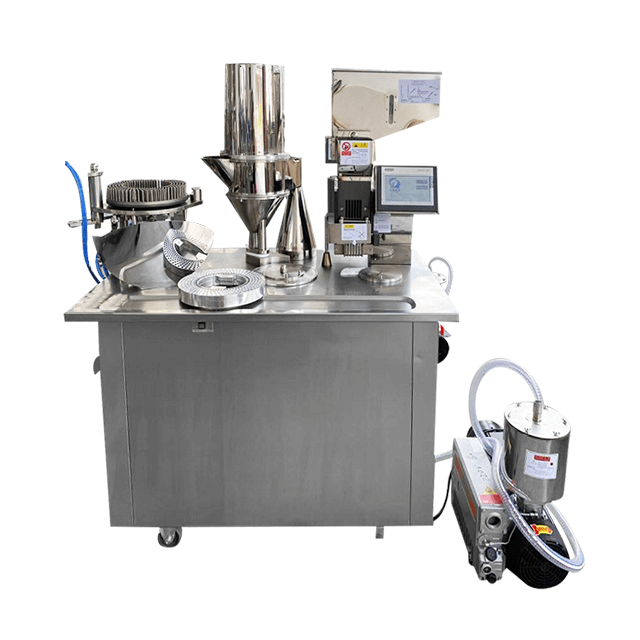
To understand the workflow, consider the standard operating sequence:
The operator places empty capsules into the hopper and activates the loading station.
The machine aligns and inserts the capsules into the two-piece metal ring, using a vacuum to separate the caps from the bodies.
The operator manually lifts the upper half of the ring (containing the caps) and sets it aside.
The lower half of the ring (containing the bodies) is moved to the dosing station.
The motorized auger or tamping mechanism fills the bodies with powder.
The operator retrieves the upper ring, aligns it over the lower ring, and moves the complete assembly to the closing station.
The machine applies pressure to lock the capsules, and pins eject the finished product.
These machines thrive in small-batch and agility-focused environments. R&D labs, clinical trial manufacturing, and compounding pharmacies benefit greatly from their flexibility. Contract manufacturing organizations handling high-mix, low-volume runs also find them ideal. They process challenging formulations, including delicate granules and cohesive powders, without specialized tooling. Because the operator can visually monitor the powder bed during the filling stage, they can make real-time adjustments to the auger speed or tamping pressure to accommodate slight variations in powder flowability.
Frequent formulation changeovers are a major advantage of semi-automatic platforms. You can run multiple distinct formulations in a single shift. Simplified cleaning protocols and tool-less disassembly minimize downtime between different products. A skilled operator can strip down the contact parts, clean them, and reassemble the machine for a completely different product in under an hour. This agility is unmatched by larger, fully enclosed systems.

Physical throughput degrades over a shift due to operator stamina limits. Continuous ring transfers cause operator fatigue, directly impacting daily yield. Variable operator technique and speed during these transfers can inadvertently impact precision. This human variable sometimes causes powder loss and minor yield inconsistencies. If an operator tilts the ring slightly during transfer, powder can spill, altering the final fill weight of those specific capsules.
Furthermore, the open nature of the powder filling station exposes the operator to airborne particles. While dust extraction systems mitigate this, highly potent APIs or sensitizing compounds may require additional personal protective equipment (PPE) or localized containment solutions, complicating the operational workflow. Facilities must weigh the ergonomic strain on operators against the flexibility the machine provides.
Fully automatic systems utilize enclosed continuous or intermittent motion rotary designs. They integrate all steps—separation, filling, closing, and ejection—into a single continuous loop. High-precision dosing mechanics rely on vacuum separation and tamping pin assemblies. Dosing disks ensure exact volumetric powder measurement before capsule insertion. The entire process occurs inside a sealed, environmentally controlled chamber, drastically reducing the risk of cross-contamination and operator exposure to airborne powders.
These systems perform automated quality control without human intervention. They feature automatic faulty capsule rejection and empty capsule sorting mechanisms. Automated finished-capsule ejection ensures a continuous flow of completed products into collection bins. The tamping pin mechanism compresses the powder into a solid slug over several stations before transferring the precise slug into the capsule body. This multi-stage compression allows for extremely tight weight tolerances, even at high speeds.
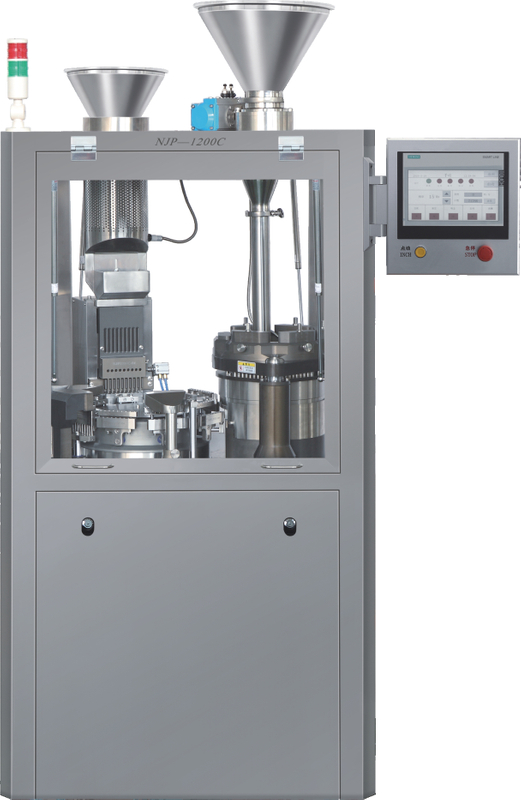
The internal sequence of an automatic rotary machine involves several distinct stations:
Capsule feeding and alignment into the segment bores.
Vacuum separation of caps and bodies.
Ejection of unseparated or faulty capsules.
Powder dosing via the tamping pin and dosing disk assembly.
Rejoining of the caps and bodies.
Final closing and locking of the capsules.
Ejection of the finished capsules into the discharge chute.
Cleaning of the segment bores via vacuum and compressed air before the next cycle.
Large-scale and continuous operations represent the best-fit environments for automatic systems. Large-scale pharmaceutical plants and high-volume nutraceutical brands rely on their massive output capabilities. Dedicated single-product manufacturing lines maximize their efficiency by running continuously. Minimal-supervision manufacturing provides strategic advantages for scaling operations rapidly. When a facility needs to produce millions of capsules of a single formulation per week, the automatic machine is the only viable solution.
These machines excel when paired with upstream and downstream automation. Integrating an automatic capsule filler with automated powder conveying systems, inline metal detectors, capsule polishers, and automated bottling lines creates a seamless, high-efficiency production ecosystem. This level of integration minimizes human touchpoints, reducing the risk of contamination and ensuring strict adherence to quality standards across massive batch sizes.

Automatic machines require a substantial initial capital outlay and a larger cleanroom footprint. They demand stricter facility utility requirements, including dedicated clean compressed air. Three-phase power and industrial vacuum lines are mandatory for operation. Changeover complexity is high, requiring hours for disassembly, cleaning, validation, and re-assembly. The dosing disk and tamping pins must be meticulously cleaned and calibrated for each specific formulation and capsule size.
Additionally, automatic machines are highly sensitive to powder flowability. If a powder is too cohesive or prone to bridging, it can jam the dosing station, leading to significant downtime and wasted material. Formulators often need to adjust the excipient ratios specifically to accommodate the mechanical demands of the automatic filler, adding a layer of complexity to product development.
The volume spectrum clearly separates these machine tiers. Manual trays yield 500 to 2,000 CPH. Semi-automatic machines bridge the gap, producing 10,000 to 30,000 CPH. Fully automatic machines operate at 40,000 to over 400,000 CPH. Realistic operational uptime differs, factoring in manual ring swaps versus automated continuous feeding. A semi-automatic machine's output is directly tied to the operator's physical speed and endurance, meaning the theoretical maximum is rarely sustained over an entire eight-hour shift.
In contrast, an automatic machine runs at a constant, predictable rate. Once calibrated and supplied with empty capsules and powder, it will maintain its rated speed indefinitely, barring any mechanical faults or material shortages. This predictability allows production planners to schedule batches with high accuracy, optimizing the overall facility workflow and ensuring reliable delivery timelines.
Fill weight accuracy heavily favors fully automatic equipment. Automatic machines utilize precise dosing disks and tamping pins to achieve tighter tolerances, often ±1-2%. Semi-automatic motorized auger systems typically achieve ±3-5% variance. Automatic systems also feature better mechanisms to reclaim or minimize lost active pharmaceutical ingredients. The enclosed dosing stations of automatic machines prevent powder from escaping into the surrounding environment, capturing excess material for potential reprocessing.
Semi-automatic machines, due to the manual transfer of rings, inherently experience more powder spillage. While skilled operators can minimize this, the physical movement of open powder beds always carries a risk of product loss. For highly expensive or potent APIs, the superior yield and waste reduction of an automatic machine can quickly offset its higher initial acquisition cost.
Workforce allocation shifts dramatically between the two systems. A semi-automatic machine requires one dedicated operator continuously loading and transferring rings. An automatic system allows one operator to monitor multiple machines simultaneously. Operator skill levels, mechanical training, and onboarding time profiles are higher for automatic systems. The operator of an automatic machine acts more as a process technician, monitoring HMI screens, checking powder levels, and performing periodic quality checks.
The semi-automatic operator performs highly repetitive physical tasks. This requires less technical training but demands higher physical stamina. Facilities must consider the ergonomic impact and potential for repetitive strain injuries when relying heavily on semi-automatic equipment for high-volume production. Rotating operators or implementing strict break schedules is necessary to maintain consistent output and worker health.
Teardown efficiency is a primary advantage of semi-automatic machines. They can be completely stripped, cleaned, and turned over in 30 to 60 minutes. Fully automatic machines require several hours of specialized cleaning. Tool-assisted adjustments and swab testing make automatic changeovers highly resource-intensive. The sheer number of contact parts in an automatic dosing station—tamping pins, dosing disks, segment bores, and powder hoppers—requires a methodical, documented cleaning procedure.
For facilities running a high-mix, low-volume strategy, the downtime associated with automatic machine changeovers can severely cripple overall productivity. In these scenarios, having multiple semi-automatic machines allows for parallel processing of different formulations, maximizing facility output despite the lower individual machine speeds.
Feature | Manual Trays | Semi-Automatic | Fully Automatic |
|---|---|---|---|
Typical Output (CPH) | 500 - 2,000 | 10,000 - 30,000 | 40,000 - 400,000+ |
Fill Weight Variance | High (±5-10%) | Medium (±3-5%) | Low (±1-2%) |
Operator Involvement | 100% Manual | Continuous physical transfer | Monitoring and material loading |
Changeover Time | < 15 minutes | 30 - 60 minutes | 2 - 4 hours |
Ideal Use Case | Micro-batches, R&D | HMLV, frequent changeovers | Continuous, high-volume runs |
Environmental control systems are critical for successful capsule filling. Precise temperature and relative humidity controls prevent powder bridging and static electricity. These controls also prevent capsule brittleness in both machine types. Infrastructure requirements include utility upgrades like three-phase electrical power, industrial-grade dry vacuum lines, and oil-free compressed air. Gelatin capsules are highly sensitive to humidity; too dry, and they shatter during closing; too humid, and they deform or stick in the segment bores.
Before installing any mechanized capsule filler, the facility must validate its HVAC system to ensure it can maintain the strict environmental parameters required by the equipment manufacturer. Upgrading the compressed air system to provide clean, dry, oil-free air is also essential to prevent contamination of the internal pneumatic components and the product itself.
Pre-commissioning protocols protect your equipment investment. Buyers must mandate comprehensive Factory Acceptance Testing and Site Acceptance Testing. Sending actual formulation samples to the equipment manufacturer for trial runs is vital. Powder compatibility trials ensure your specific granules or cohesive powders work with the dosing mechanisms. Never assume that a machine will handle your specific formulation perfectly out of the box.
During the FAT, run the machine at its maximum rated speed using your most difficult powder. Monitor the fill weight variance, the rejection rate of empty capsules, and the overall stability of the machine. This is the time to identify and resolve any mechanical or software issues before the equipment ships to your facility. A rigorous FAT protocol is the best defense against costly post-installation modifications.
Choosing between an automatic and a semi automatic capsule filling machine should be based on your production objectives, formulation characteristics, facility capabilities, and long-term business strategy. Selecting equipment that aligns with your manufacturing requirements will improve production efficiency, ensure consistent product quality, reduce operating costs, and provide greater flexibility for future expansion.
To make the right investment decision, consider the following recommendations:
Evaluate your current production volume and forecast future capacity requirements before selecting equipment.
Test your formulations on both machine types to verify filling accuracy, powder flowability, and production stability.
Assess your facility's utilities, cleanroom conditions, and available labor resources before installation.
Partner with an experienced equipment manufacturer that offers comprehensive validation support, technical training, and responsive after-sales service.
With decades of experience in pharmaceutical machinery manufacturing, TIANHONG has established a strong reputation as a trusted global supplier of capsule filling machines and integrated pharmaceutical production solutions. By combining intelligent automation, precision engineering, advanced manufacturing technology, and strict GMP quality management, the company delivers reliable equipment that enables pharmaceutical and nutraceutical manufacturers worldwide to achieve higher productivity, greater dosing accuracy, and more efficient production operations.
From semi automatic capsule filling machines for flexible small-batch production to high-speed automatic capsule filling systems for large-scale manufacturing, TIANHONG provides customized equipment solutions, engineering consultation, installation and commissioning, IQ/OQ validation support, operator training, and comprehensive lifecycle after-sales service. Through continuous technological innovation and customer-oriented engineering, the company helps manufacturers optimize production efficiency, lower operating costs, maintain consistent product quality, and build sustainable, future-ready pharmaceutical manufacturing facilities.
A: Manual trays require manual capsule separation, alignment, and tamping, limiting output to under 2,000 CPH with highly variable fill weights. Semi-automatic machines automate alignment and use motorized tamping or augers to boost output to 10,000–30,000 CPH with much higher weight consistency.
A: Semi-automatic machines typically cap around 30,000 CPH due to reliance on manual ring transfers. Automatic machines operate continuously without manual intervention, achieving outputs ranging from 40,000 to over 400,000 CPH depending on the specific model and configuration.
A: Typically, one trained operator can monitor one or even multiple automatic capsule filling machines simultaneously. The operator's primary role shifts from manual material handling to monitoring powder levels, clearing occasional jams, and overseeing automated quality control processes.
A: Yes, semi-automatic machines often handle challenging formulations like cohesive powders better than some automatic systems. Their simpler auger or motorized tamping mechanisms, combined with operator oversight, allow for processing difficult materials without the frequent jamming seen in enclosed automatic dosing stations.
A: Semi-automatic machines are significantly better for frequent changeovers. They feature fewer complex parts and can be disassembled, cleaned, and reassembled in under an hour. Automatic machines require complex teardowns, specialized cleaning, and validation that can take several hours between products.
A: Yes. Automatic capsule filling machines require dedicated clean compressed air, industrial-grade dry vacuum lines, and three-phase electrical power. Facilities must also maintain strict temperature and humidity controls to ensure optimal machine performance and powder flowability.
